
How Universal Studios lost the shark from JAWS
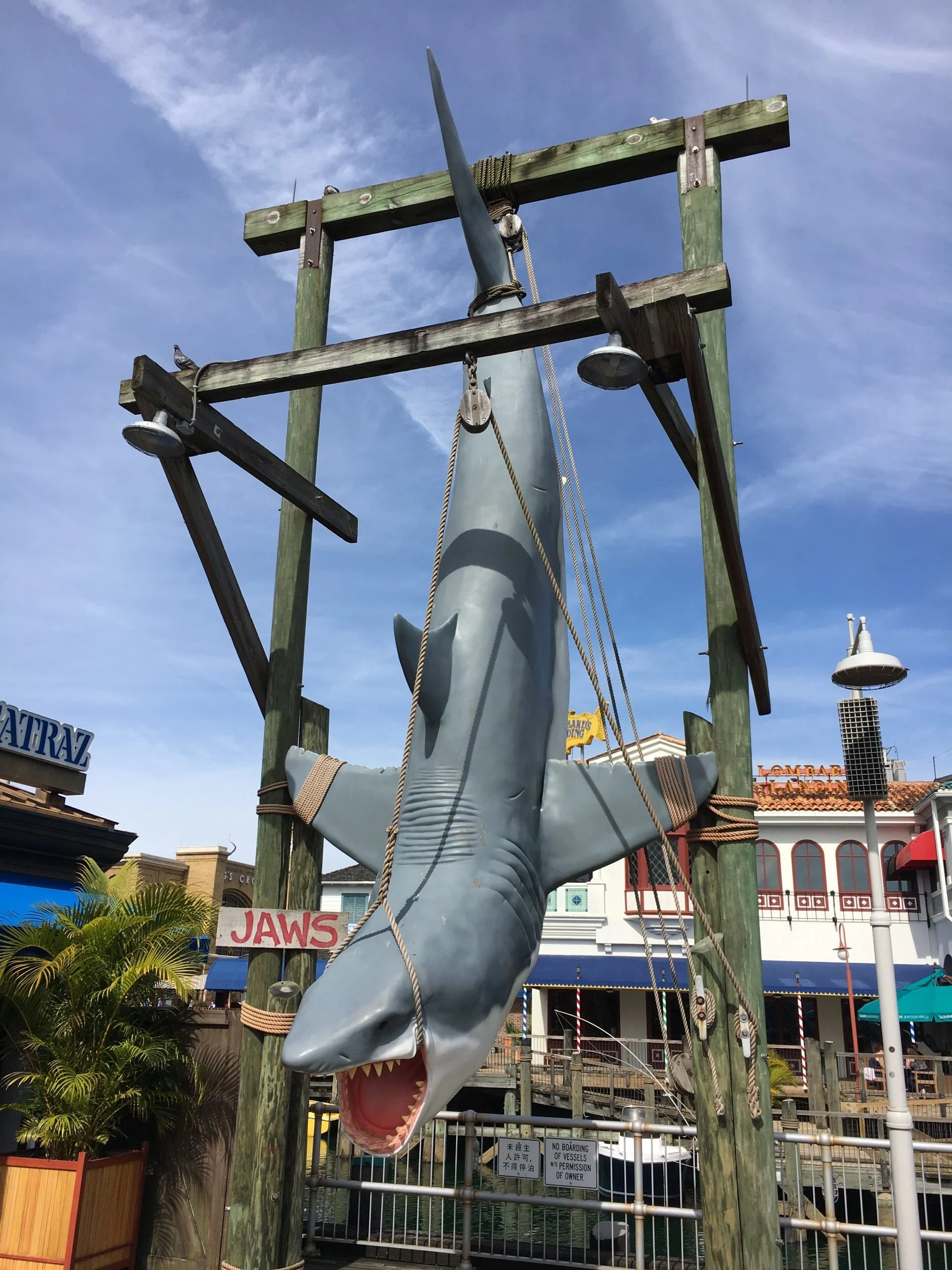
For generations of visitors to Universal Studios Hollywood, one of the most iconic photo opportunities was standing beneath the massive carcass of “Bruce,” the great white shark from Steven Spielberg’s 1975 blockbuster Jaws. Hung from a dockside crane near the Studio Tour, the shark became almost as recognizable to guests as the famous Hollywood sign itself. Yet sometime in the early 1990s, the original shark disappeared. In its place appeared a generic fiberglass replacement that many longtime fans immediately recognized as an impostor.
The story of how Universal Studios lost its shark is not simply a tale about a missing movie prop. It is also a story about corporate acquisitions, shifting priorities, and how one of Hollywood’s most valuable icons was quietly discarded during a period of major upheaval.
The Shark That Became a Landmark
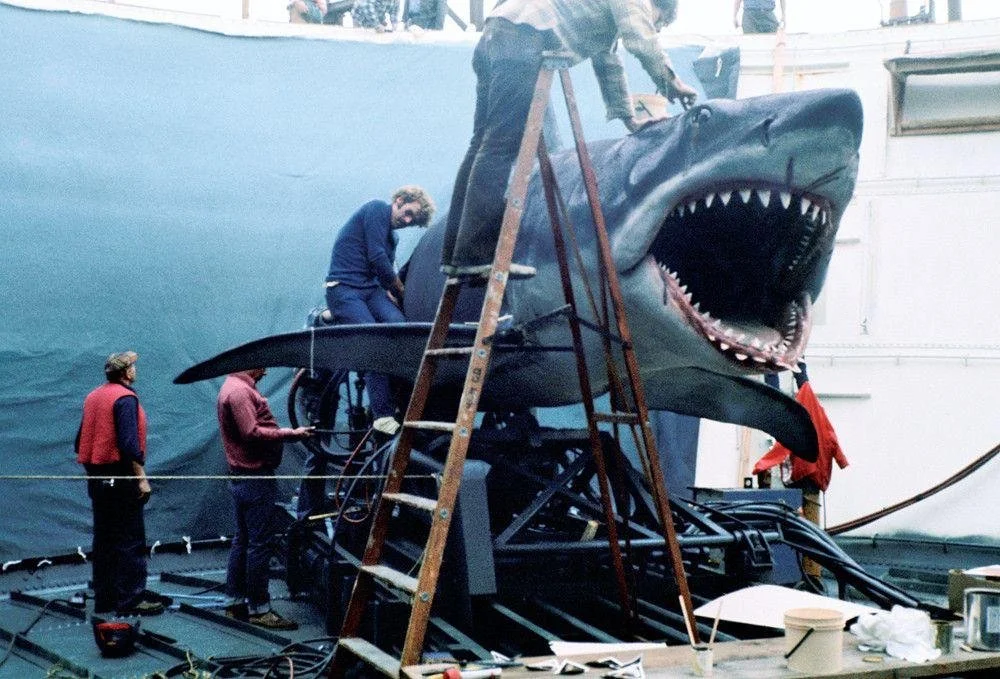
When Jaws premiered in 1975, it changed the movie business forever. The film became the highest-grossing movie in history at the time and established the modern summer blockbuster model. Its success generated hundreds of millions of dollars in revenue and turned the mechanical shark nicknamed “Bruce” into one of cinema’s most famous monsters. (Reddit)
Universal quickly realized the marketing value of the shark. A large display featuring Bruce suspended from a crane became a permanent fixture on the Universal Studios Tour in Hollywood. For years, guests posed beneath the enormous predator, creating family photographs that became treasured souvenirs. The shark was more than a prop—it was a symbol of Universal Pictures itself.
According to longtime studio insiders and park historians, the original display shark survived well beyond the film’s release. By the late 1980s, however, questions emerged about its future. The fiberglass structure had aged, maintenance costs were increasing, and executives periodically discussed removing it altogether.
A Corporate Earthquake
The decisive turning point arrived in 1990, when Japanese electronics giant Matsushita Electric Industrial Co.—today known as Panasonic—agreed to purchase MCA, Universal’s parent company, for approximately $6.6 billion. The acquisition was one of the largest Japanese purchases of an American company at the time and included Universal Pictures, the Universal Studios theme parks, television assets, music labels, and vast film libraries. (Los Angeles Times)
Matsushita’s primary interest was not theme parks. Industry observers widely viewed the acquisition as part of a larger strategy linking entertainment content with consumer electronics, particularly home video technologies and the growing market for prerecorded media. Executives believed ownership of valuable film and television content could complement the company’s dominance in VCRs and other hardware. (money.cnn.com)
In the years following the acquisition, Universal underwent significant restructuring. Various assets were sold, reorganized, or deemphasized as the company adjusted to new ownership. (universalstudios.fandom.com)
Amid these changes, many longtime employees felt that historical artifacts and studio traditions received less attention than they once had. The aging Jaws shark display became one casualty of this changing corporate environment.
The Disappearance of Bruce
According to accounts from former employees and studio enthusiasts, the original Hollywood shark was eventually removed and destroyed. While exact details remain difficult to verify through official records, numerous recollections suggest the shark’s removal occurred during the early years following the Matsushita acquisition.
What makes the story remarkable is not merely that the shark disappeared, but that there was little public acknowledgment of its fate. No museum preservation effort was announced. No restoration project was undertaken. One of Universal’s most recognizable pieces of movie history simply vanished.
The location where Bruce once hung reportedly remained empty for several years.
For fans, the loss represented more than the removal of a display. It symbolized a broader shift in how studios treated their physical history. At a time before Hollywood fully embraced the value of preserving movie artifacts for exhibitions, archives, and nostalgia-driven tourism, many props and set pieces were routinely discarded when they no longer served an immediate operational purpose.
The Arrival of “Jabberjaw”
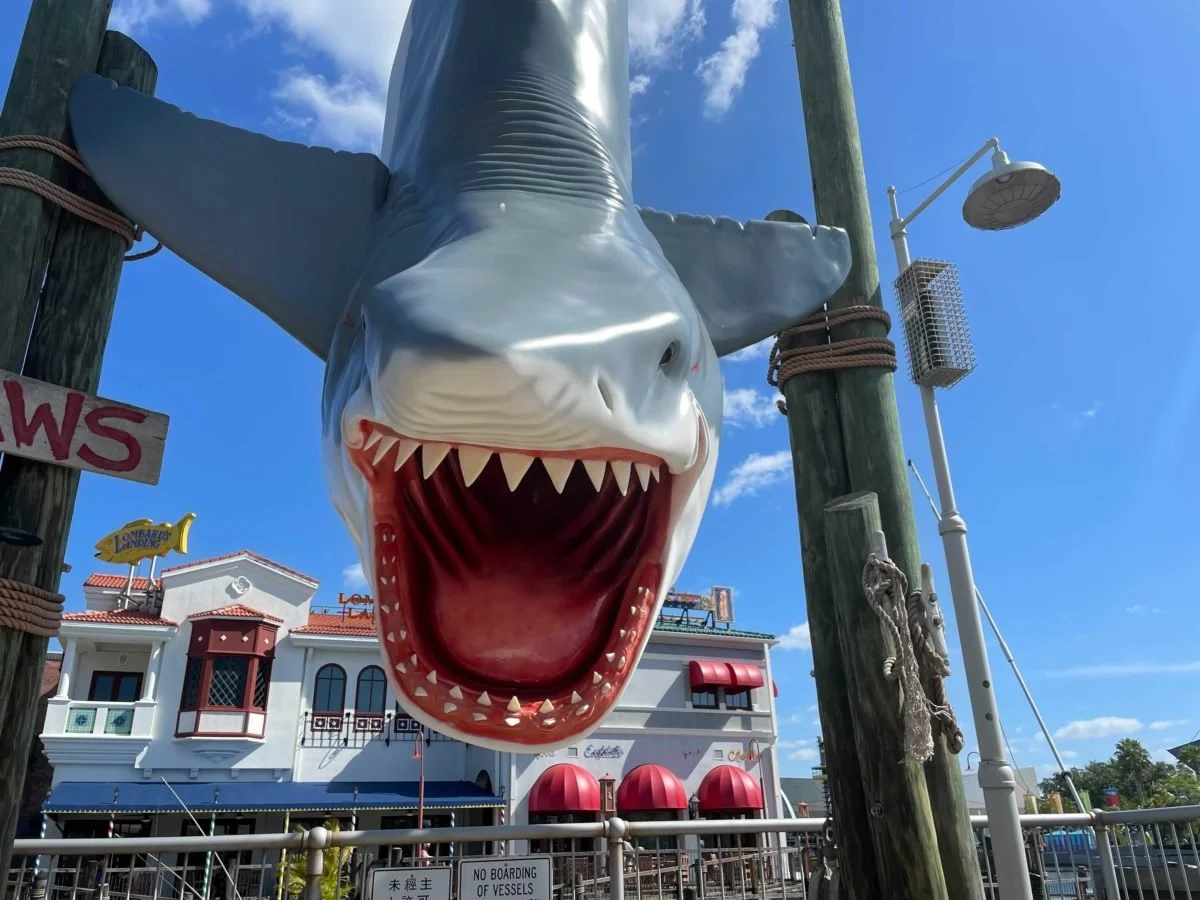
By the mid-1990s, Universal finally addressed the empty space. Instead of recreating the original shark or restoring surviving elements, the studio purchased a commercially manufactured shark statue and installed it where Bruce had once hung.
An identical model was also used at Universal’s Florida Jaws attraction, which had opened in 1990 as part of Universal Studios Florida. (Wikipedia)
To casual visitors, the replacement served its purpose. Guests continued posing for photographs, often unaware that the shark overhead had no direct connection to Spielberg’s film. Yet many longtime fans immediately noticed the difference.
The new shark lacked the proportions and distinctive appearance of the movie creature. Critics argued that its anatomy resembled a generic predator rather than the famous great white from Jaws. Some enthusiasts mockingly nicknamed it “Jabberjaw,” after the cartoon shark character from the 1970s. Others described it as looking more like a mako shark than Bruce.
Despite the criticism, the replacement endured. For more than three decades, millions of visitors have continued to photograph themselves beneath the fiberglass shark, often assuming they are standing in front of a genuine relic from one of Hollywood’s greatest films.
Why It Matters
The disappearance of the original Jaws shark illustrates a larger issue in entertainment history: the tension between preservation and practicality.
Today, studios aggressively protect and display their cinematic heritage. Costumes, vehicles, props, and animatronics are routinely restored and exhibited because they attract fans and generate revenue. Yet during the 1980s and early 1990s, many iconic artifacts were still viewed as expendable operational assets rather than historical treasures.
Had the original shark survived into the modern era of movie museums and nostalgia marketing, it likely would have been carefully restored and showcased as a centerpiece attraction. Instead, it became another example of Hollywood history lost through neglect and changing corporate priorities.
Conclusion
Universal Studios did not lose the Jaws shark in a dramatic accident or catastrophic fire. It disappeared through a series of corporate decisions made during a period of ownership change and organizational restructuring. The 1990 acquisition of MCA by Matsushita shifted attention toward broader business goals, while aging studio artifacts received less consideration. (Los Angeles Times)
The result was the quiet removal of one of the studio’s most beloved icons. In its place came a mass-produced substitute that still hangs today, fooling countless visitors but disappointing many devoted fans.
For those who remember the original Bruce, the replacement is more than just an inaccurate shark statue. It is a reminder that even Hollywood legends can disappear—not with a splash, but with a memo and a dumpster.
Greg Nicotero restored a the last remaining Bruce shark mould for the Los Angeles Academy Museum. Watch our exclusive interview with Greg (and Bruce) below.
If you would like to write for The Daily Jaws, please visit our ‘work with us’ page
For all the latest Jaws, shark and shark movie news, follow The Daily Jaws on Instagram, Twitter and Facebook.