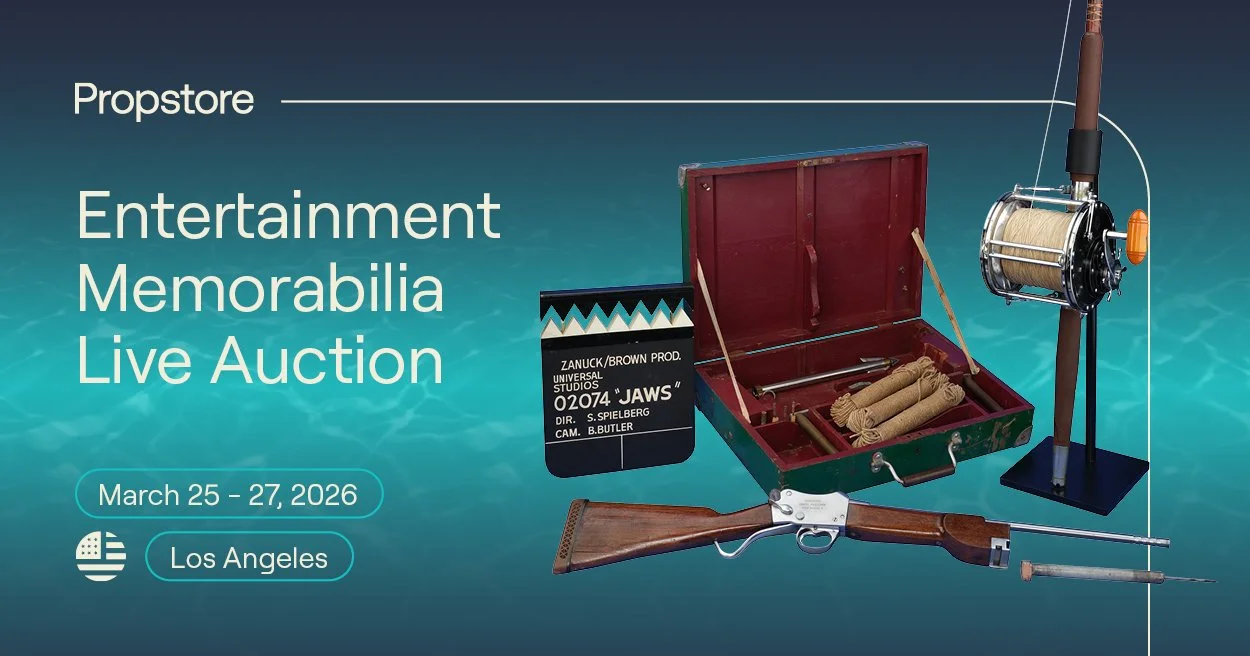
Propstore brings iconic JAWS Greener Light harpoon gun to auction
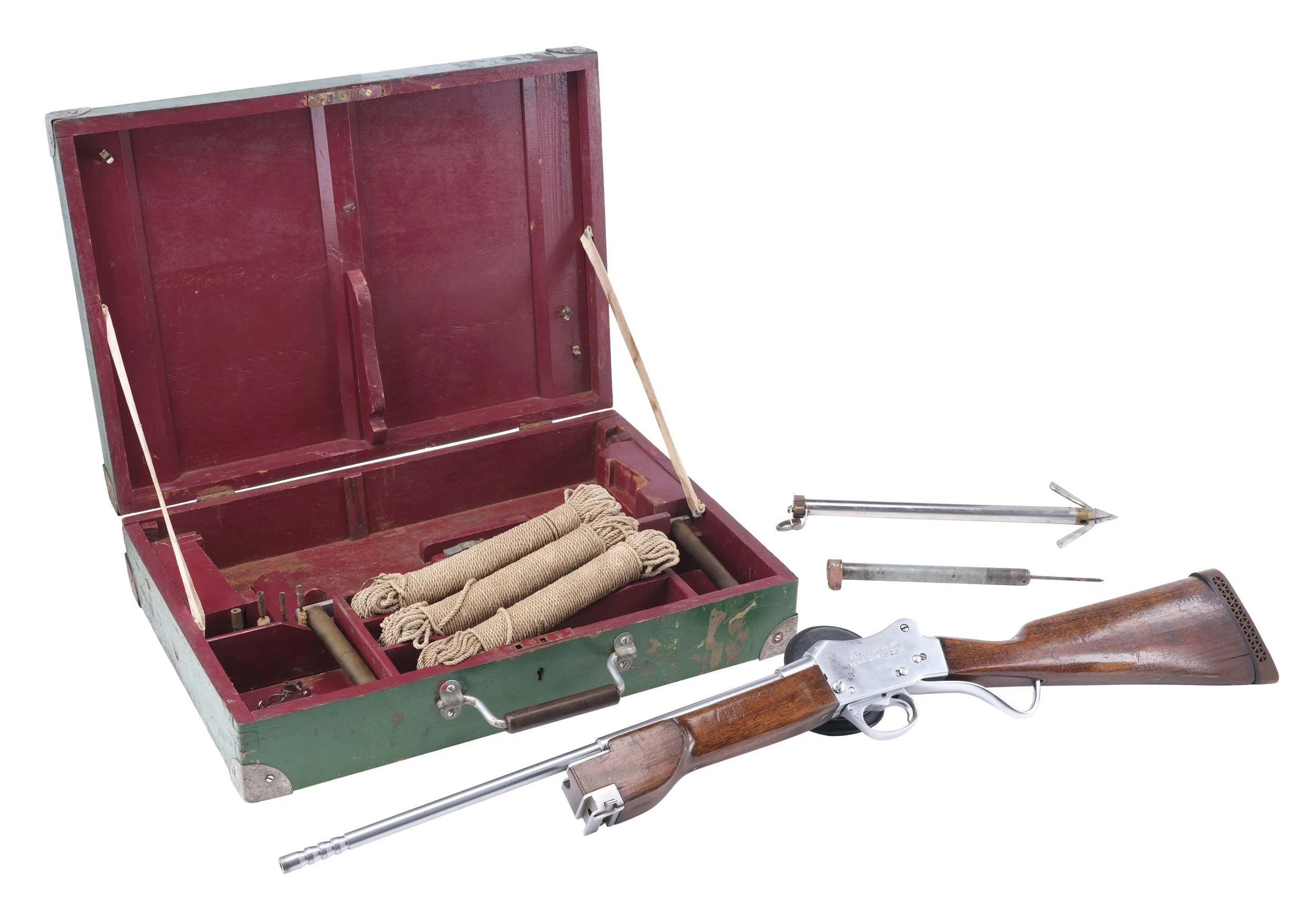
Quint’s (Robert Shaw) Screen- and Photo-Matched Greener Harpoon Gun with Screen-Matching Case and Custom SFX Shark Dart W.W. Greener Light Harpoon Gun Mark II, Serial No. H76256
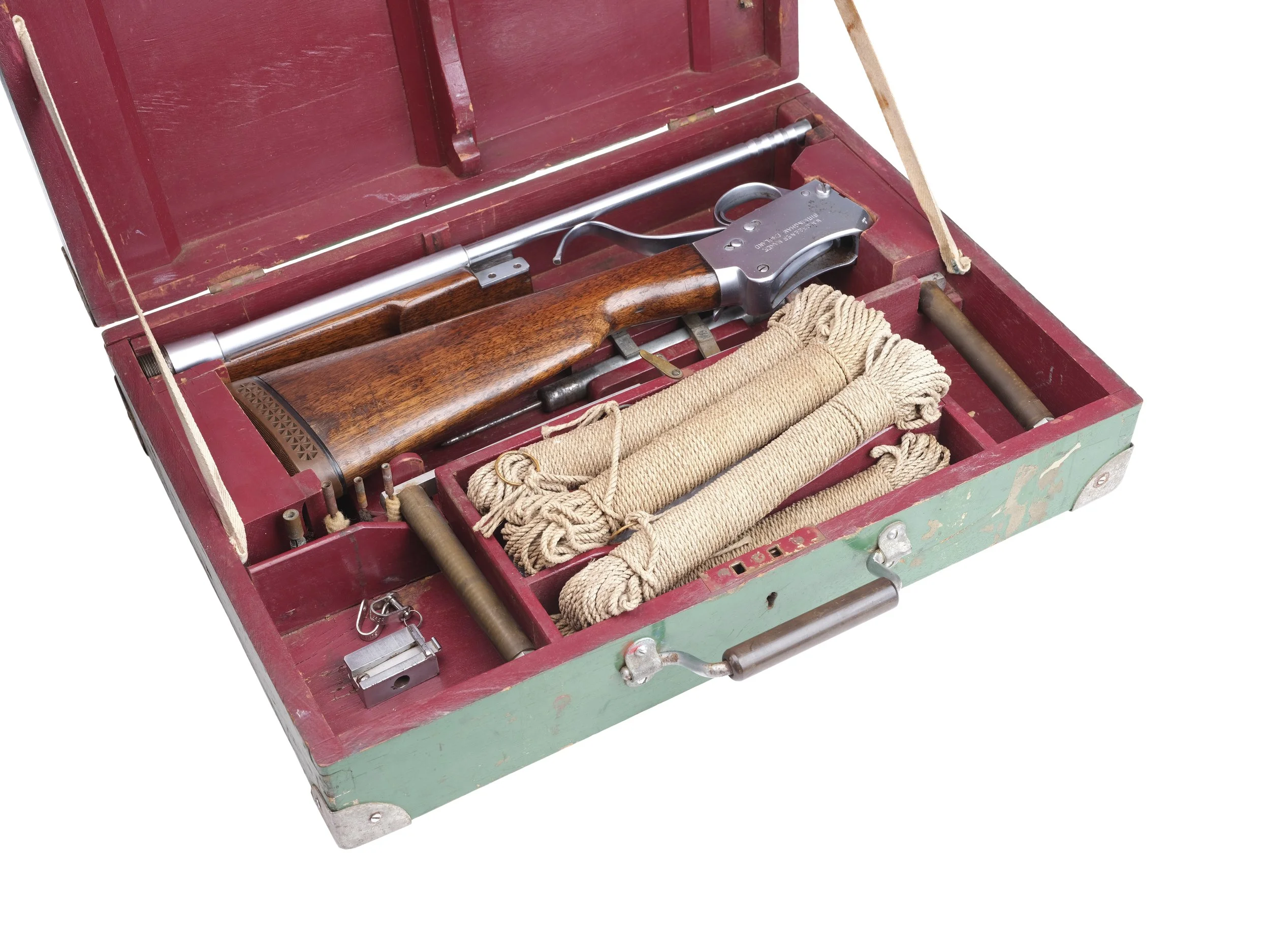
Quint’s (Robert Shaw) screen- and photo-matched W.W. Greener Harpoon Gun Mark II, accompanied by its screen-matching case and a custom effects-made shark dart created for use during production. Manufactured in Birmingham, England and imported into the United States by Navy Arms Corporation, this example bears serial number H76256 (unit no. 256). Greener produced these specialized hunting rifles from the 1950s through the 1970s for commercial whaling and shark hunting, selling them as complete kits that included harpoons, line, cleaning implements, blank ammunition, and essential accessories.
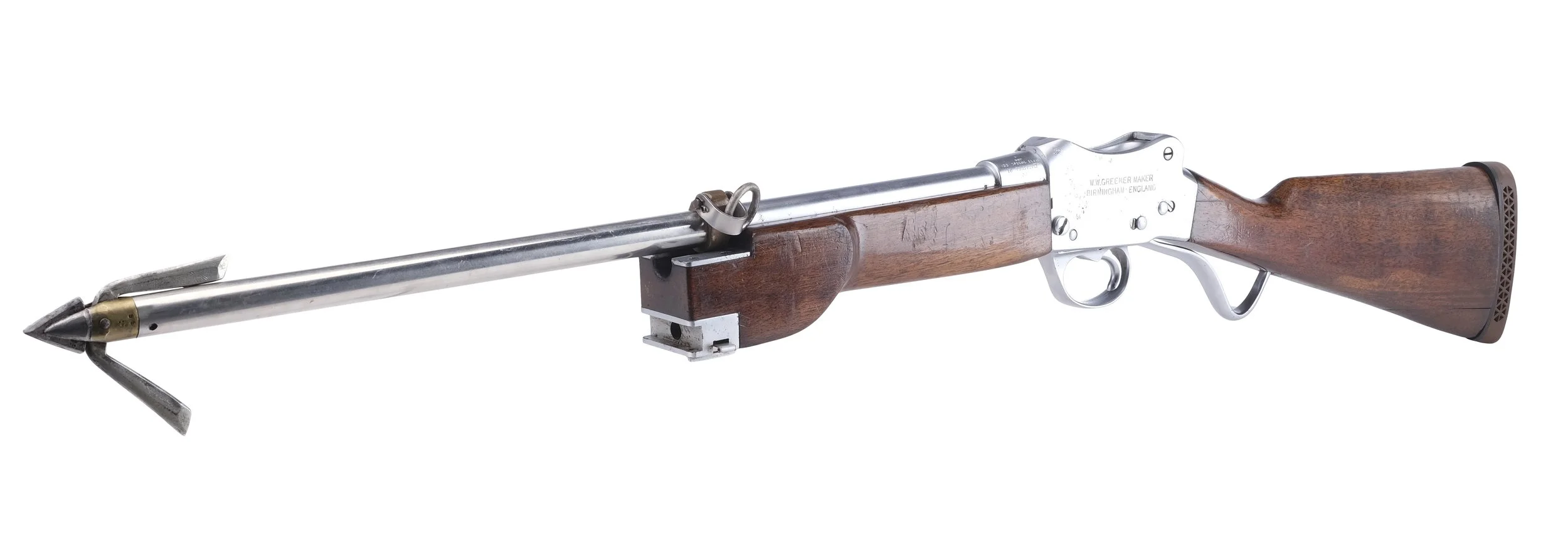
The filmmakers selected and used this Greener harpoon gun and its accompanying kit exactly as purchased—a completely stock commercial unit. The gun, case, line, tools, and harpoon were all employed on set without modification. The only fabricated element was the streamlined SFX shark dart, used only when embedded in the mechanical shark and not shown clearly within the case. As a result, the entire on-screen setup reflects the original factory configuration, making its survival with all major components intact especially remarkable.
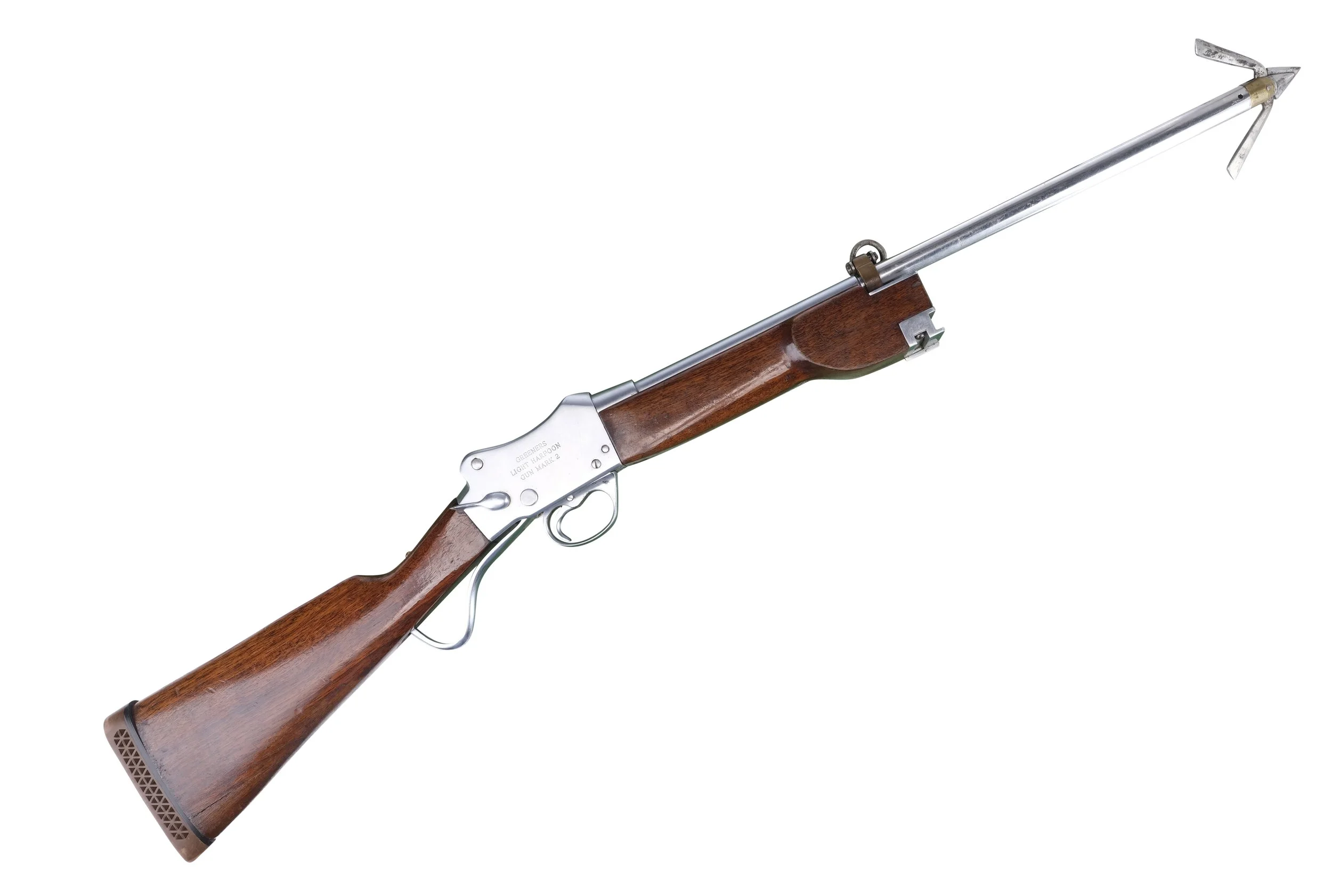
In Jaws, the harpoon gun serves as one of the most defining tools of Quint’s trade—the implement that encapsulates his identity as a hardened, traditional shark hunter. As the hunt intensifies, this is the weapon Quint trusts to turn the tide. Using the Greener, he fires harpoons attached to the bright yellow barrels that become tethered to the shark once the harpoon embeds. The barrels’ resistance to submersion creates both visual markers and narrative tension, driving some of the film’s most iconic sequences. The successful attachment of the first barrel marks a crucial turning point in the story, making the Greener not merely a prop, but an instrument essential to the film’s momentum.
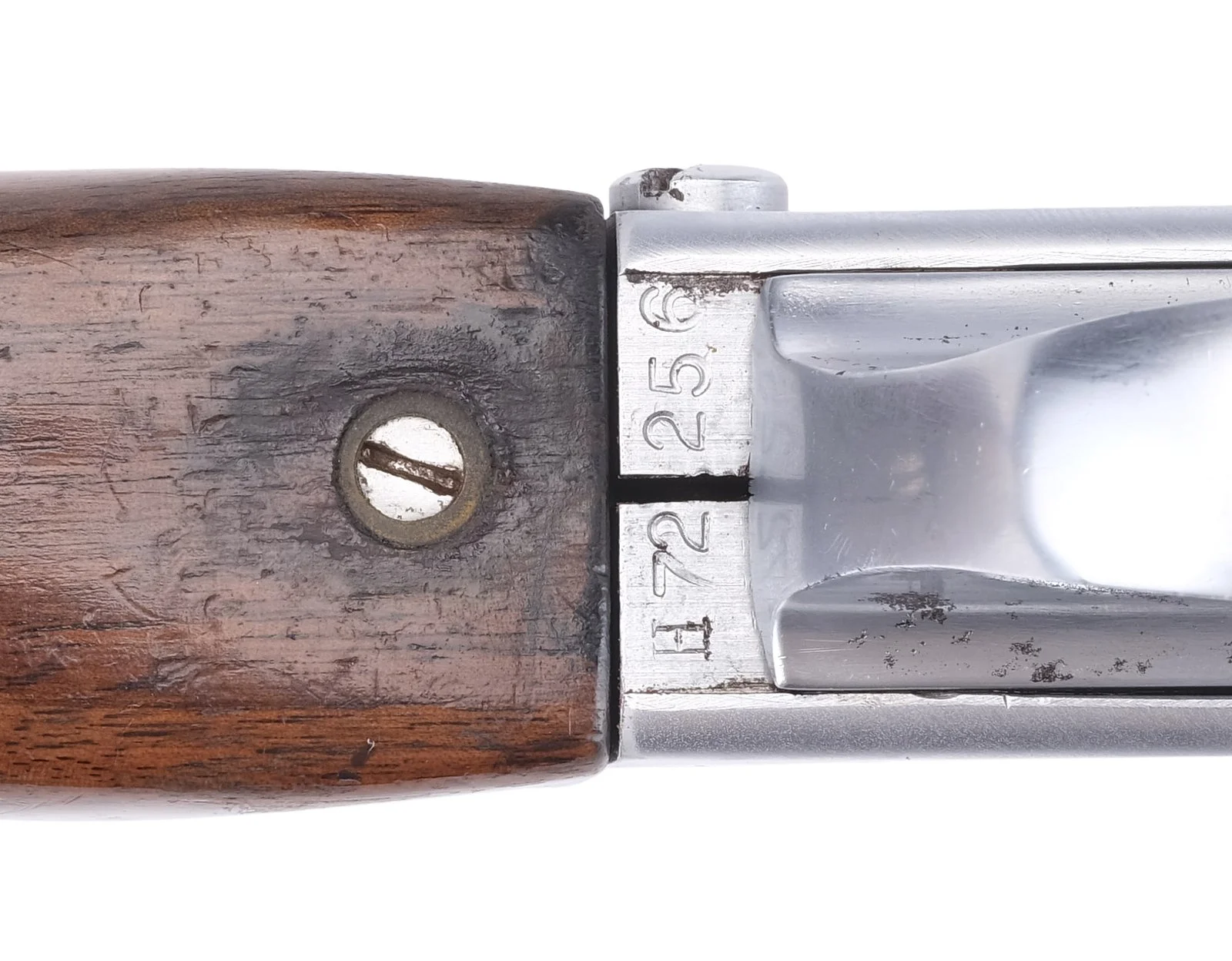
This rifle is conclusively screen-matched. The distinctive woodgrain of the stock appears in the close-up shot as Quint opens the case, and production photography confirms the match across all visible grain patterns. The green transport case—seen inside and out in the film—exhibits identical scratches, marks, and woodgrain patterns to the present example. Multiple production stills further capture the rifle’s details with clarity, including the well-known publicity image of Robert Shaw holding it, later used on the cover of his posthumously published autobiography.
After filming, the harpoon gun was returned to the Universal Studios armory, where it remained until being offered in Butterfield’s 1990 sale of “property from a major motion picture studio.” The 1990 Butterfield’s auction catalog explicitly listed this harpoon gun by its serial number, H76256, directly tying this exact piece to Universal Studios and establishing an unbroken chain of provenance from production to sale. It was the only Greener harpoon gun in the Universal armory and the sole example in the auction.
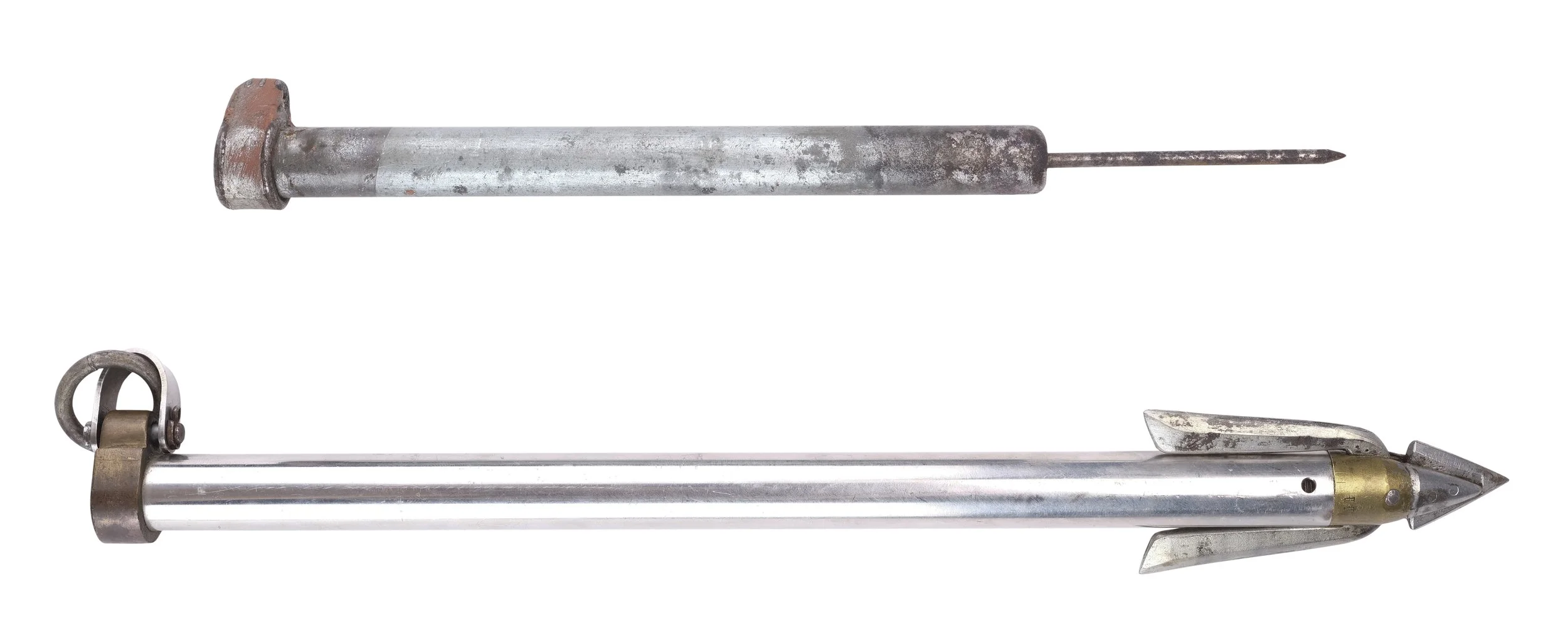
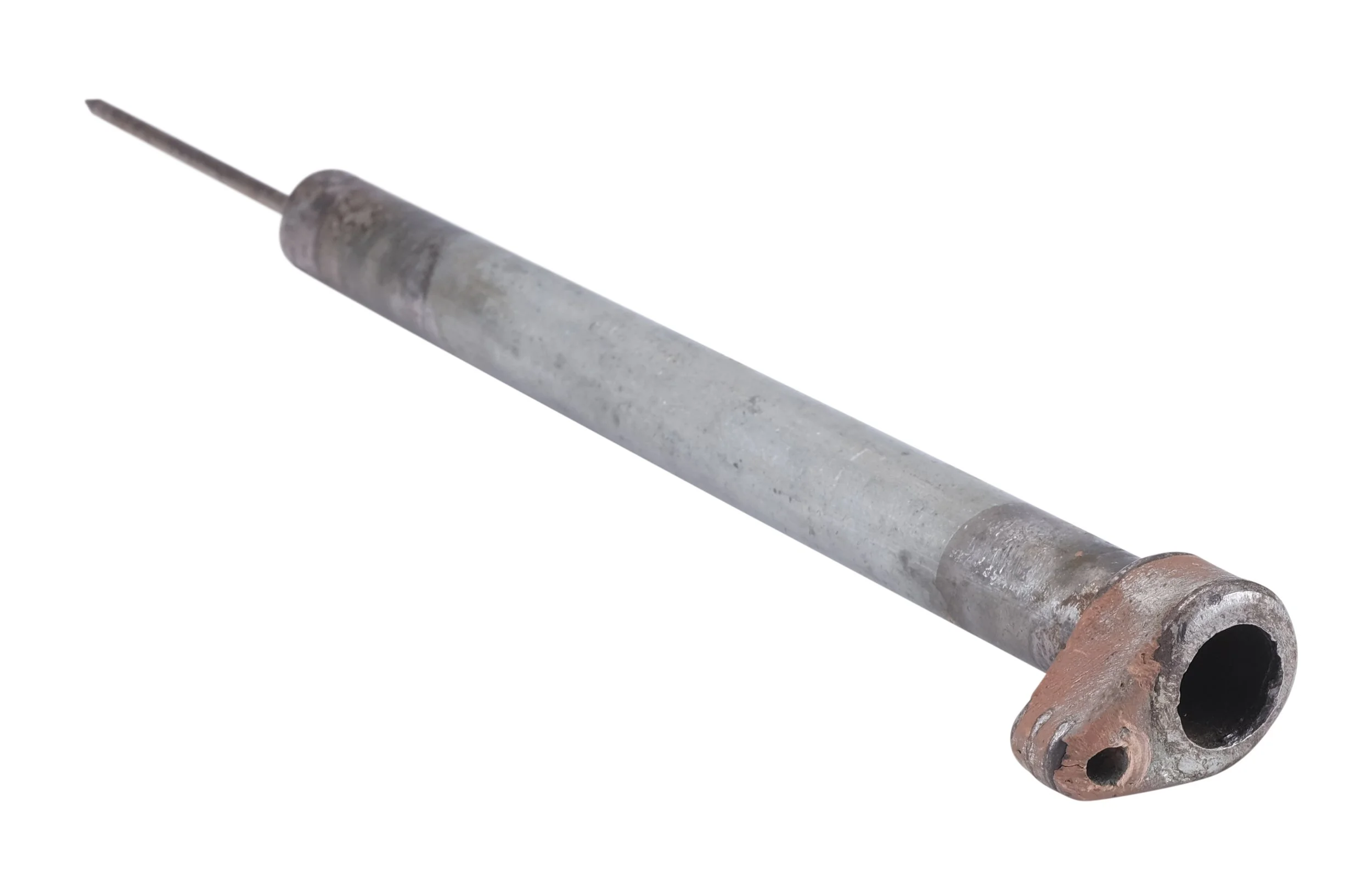
One of the most exceptional elements surviving with the gun is a custom-made SFX shark dart, fabricated from metal pipe and Bondo for interaction with the production’s shark prop. Real Greener harpoons use expanding prongs that lock inside real animals and cannot be withdrawn without damage—entirely impractical for the mechanical shark. As a solution, the effects team created this needle-tipped version to puncture the prop cleanly. It remains stored in the case exactly as it was during production.
Additional components included with the lot:
• One original Greener harpoon
• Five rolls of line
• One of the original under-barrel line-spool components (unused in the film)
• Original cleaning tools and partial cleaning rod
• Hardware for line attachment and use
The rifle remains in remarkably original condition for a piece used in a salt-air maritime production nearly fifty years ago. The rubber butt pad on the shoulder stock is not original to the piece; it is the same model and style supplied by Greener, but appears to have been replaced at some point—likely after the original deteriorated with age, as is typical for this material. The metalwork shows light rust and oxidation, consistent with use and storage near the ocean during production. A small crack is visible near the bottom of the stock, and the wood may have been revarnished at some point in its post-production life. Importantly, the rifle’s distinctive woodgrain—used to positively screen-match it—remains unaltered, clearly visible, and perfectly consistent with its appearance in the film.
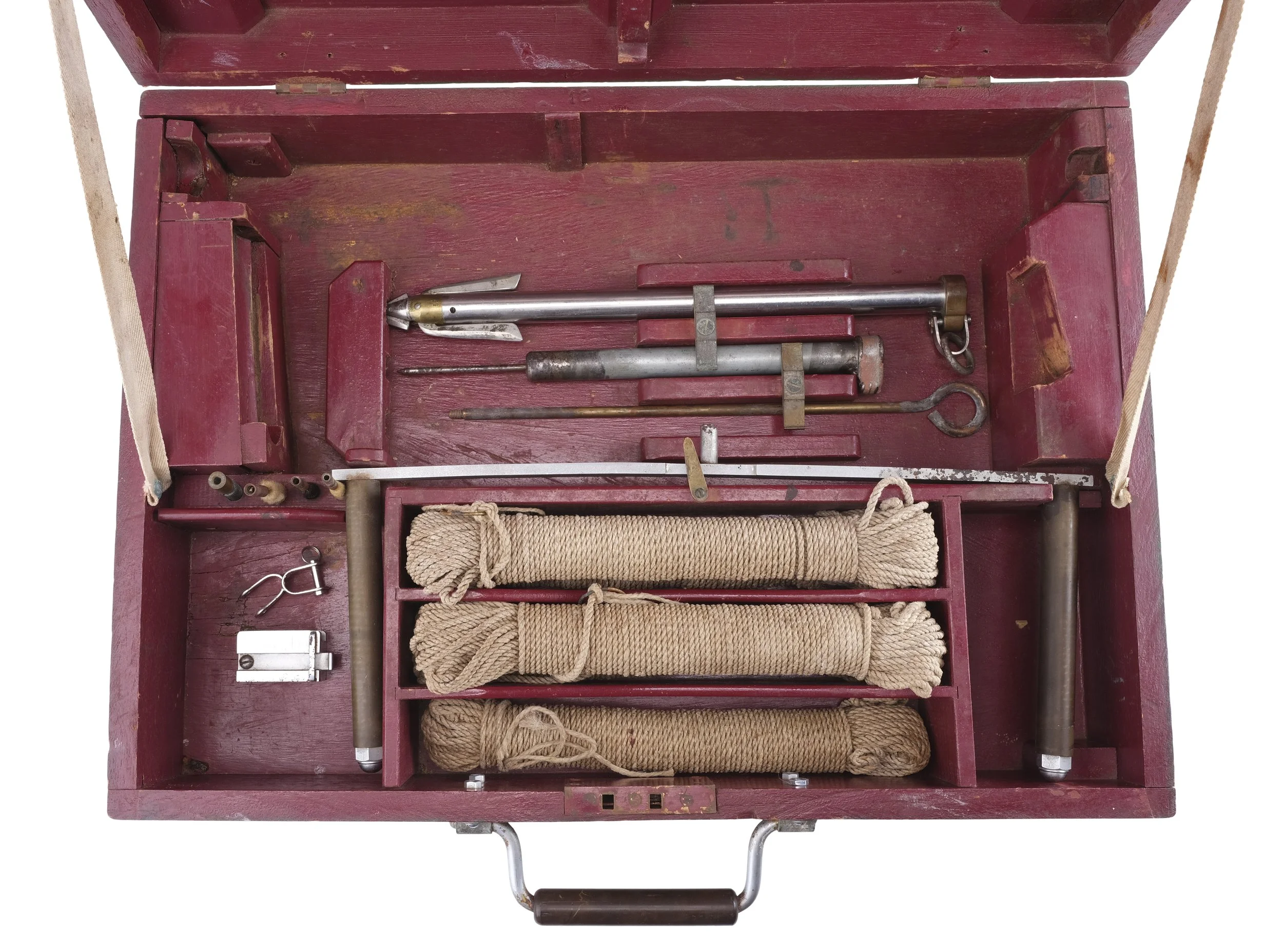
The case survives in unrestored, production-used condition, displaying the same marks, scratches, and construction details seen on screen. Its preservation is extraordinary; it appears today almost exactly as it did on film in Jaws, a rarity for any working container used in the harsh conditions of a saltwater set. That both the rifle and its case remain so closely aligned with their on-screen appearance after five decades is nothing short of remarkable.
Jaws is one of the most influential films ever made, widely recognized as the movie that launched Steven Spielberg’s career and forever changed Hollywood. Upon release in 1975, it became the highest-grossing film in history, the first to surpass the $100 million box-office milestone, and the blueprint for the modern summer blockbuster. Universally acclaimed, it remains a fixture on “greatest films” lists, with the American Film Institute ranking it among the top 50 American films of all time and honoring its legendary score among the greatest ever composed. Despite this towering legacy, very few screen-matched, hero-level props from Jaws survive; the ocean shoot destroyed many items, and little material was retained by the studio. Only a minute number of definitively matched, story-significant artifacts have ever reached the market—making the offering of a piece as central as Quint’s harpoon gun extraordinarily rare.
This is the original Quint harpoon gun used in Jaws. While another example may have existed on set in case something happened to this primary rifle, every scene and every production still in which the weapon is clearly visible matches precisely to this piece. Combined with its serial-number documentation, Universal lineage, and the inclusion of the handmade SFX dart, its authenticity and significance are unequivocal and this artifact stands as one of the most important pieces from the film ever to reach public auction.