
Why the ferry conversation is the most important scene in JAWS
When people think of Jaws, they usually remember the shark itself: the opening attack, the terror on the beach, the explosive finale aboard the Orca. Yet the film’s most important scene contains no shark at all. It takes place aboard a ferry shortly after the first victim has been identified, when Chief Martin Brody finds himself pressured by the mayor, the medical examiner, and the local newspaper editor to keep Amity Island’s beaches open.
This scene is the moral center of Jaws. It establishes the film’s central conflict, defines Brody’s character, and creates the guilt that drives his actions for the remainder of the story. More than any shark attack or suspense sequence, it is the moment that gives the film its emotional weight.
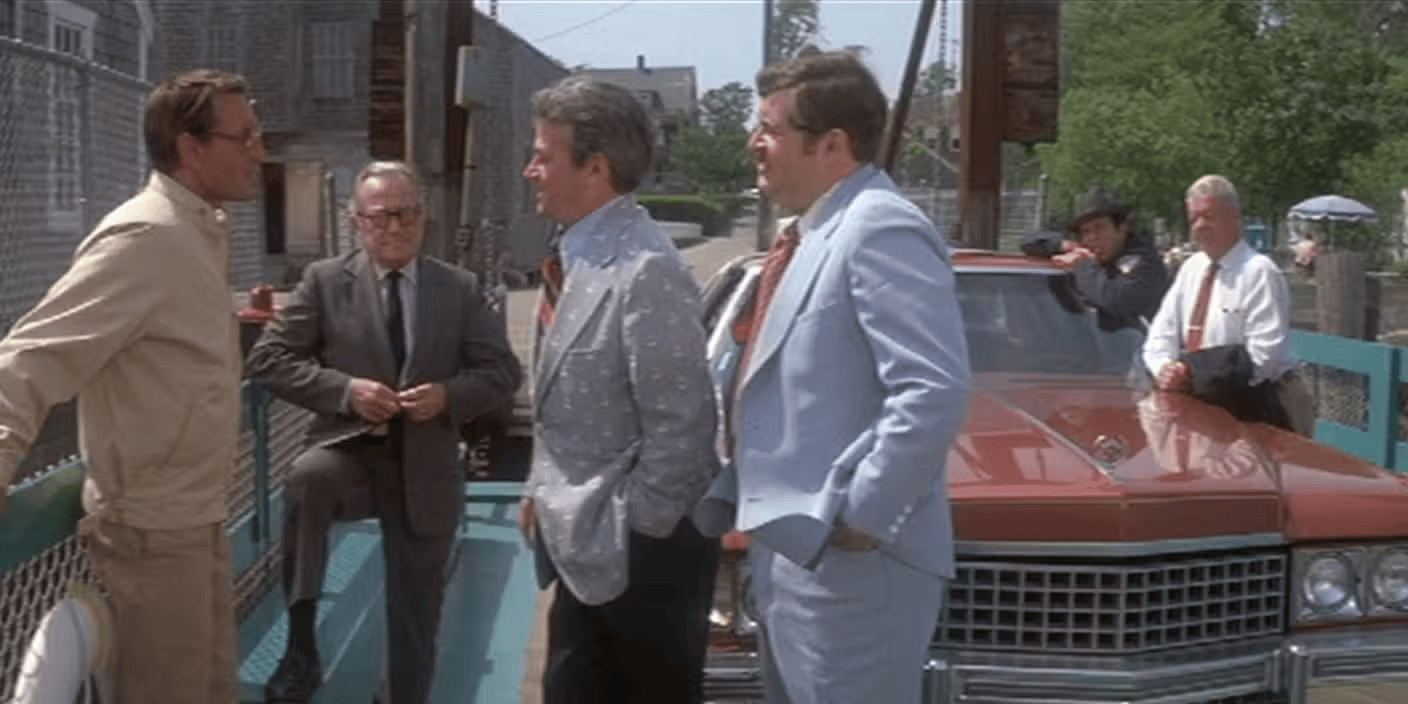
The moment Brody learns the truth
Before the ferry scene, Brody has already reached the correct conclusion. After examining the remains of the young woman killed in the opening attack, he prepares to close the beaches. As police chief, he understands that public safety must come first. His instincts are sound, and his decision is responsible.
The ferry meeting changes everything.
Mayor Larry Vaughn, backed by the medical examiner and the newspaper editor, argues that closing the beaches would devastate the island’s economy. Amity survives on summer tourism, and Brody is reminded repeatedly that he is new to the island and unfamiliar with its traditions. The implication is clear: the outsiders do not understand how things work in Amity.
What makes the scene so compelling is that nobody convinces Brody he is wrong. He never stops believing a shark is responsible. Instead, he is persuaded to ignore what he knows to be true. The conflict is not between competing facts; it is between truth and pressure.
That distinction is crucial. Brody's failure is not ignorance. It is compromise.
The birth of Brody's guilt
The ferry scene creates the burden that Brody carries throughout the film.
Had he simply misjudged the evidence, his later actions would be motivated by duty alone. But because he knowingly abandons his original decision, every subsequent attack becomes linked to his moment of weakness. When young Alex Kintner is killed in broad daylight, the tragedy is not merely another shark attack. It is the consequence of a warning that went unheeded.
The film never allows Brody—or the audience—to forget this connection.
His expression after the Kintner attack reveals more than shock. It reveals remorse. He understands that the beaches should have been closed when he first proposed it. The death of a child transforms a bureaucratic mistake into a personal failure.
From this point forward, Brody is no longer simply trying to stop a shark. He is trying to make amends.

Making the ferry scene in JAWS (image credit unknown)
The scene reveals the film's real villain
Although Jaws is remembered as a monster movie, the ferry scene suggests that the shark is not the story's true antagonist.
The shark is dangerous, but it acts according to instinct. The human characters, by contrast, choose to suppress the truth because acknowledging it would be inconvenient. The mayor prioritizes commerce over safety. The medical examiner abandons his professional judgment. The newspaper editor participates in maintaining a reassuring public narrative.
The ferry scene demonstrates that the disaster unfolding in Amity is not caused solely by nature. It is enabled by human denial.
This theme echoes throughout the film. Again and again, people delay action because confronting reality would require sacrifice. The shark becomes a test of character, exposing who is willing to act responsibly and who prefers comforting illusions.
Brody fails that test once on the ferry. The rest of the film chronicles his determination not to fail it again.
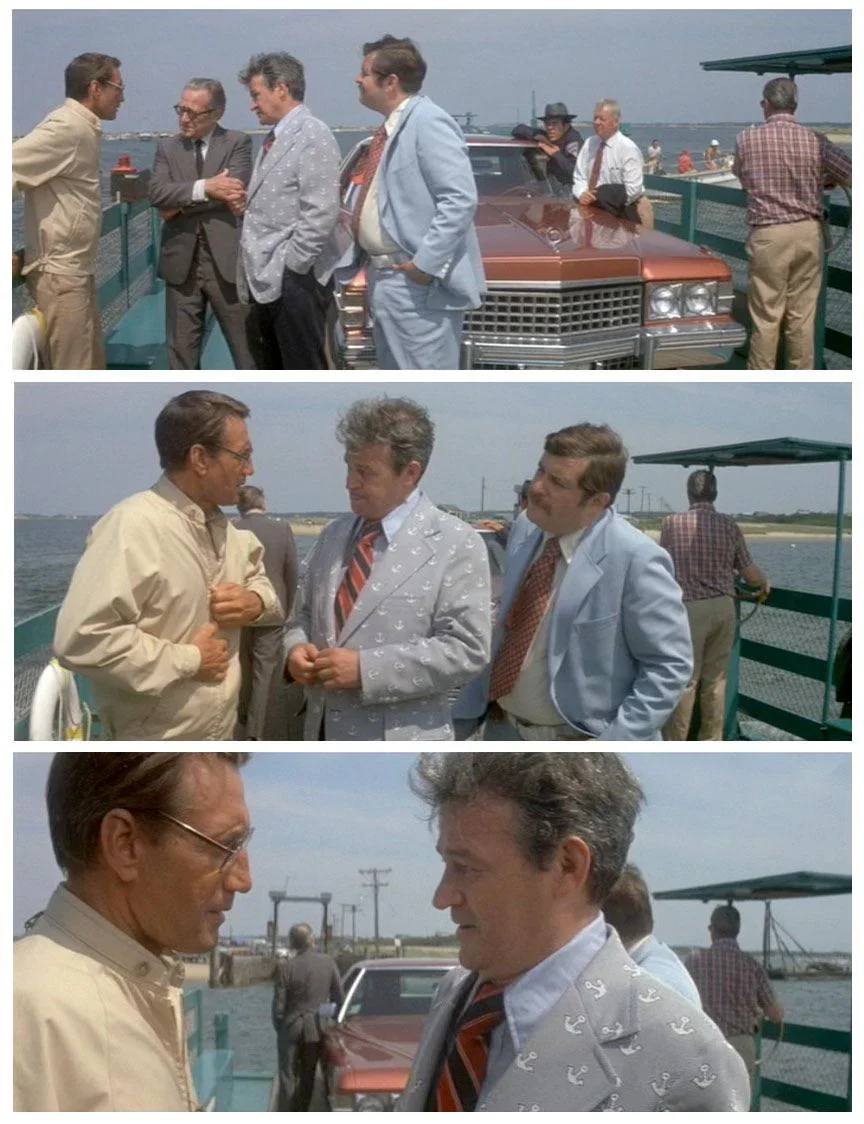
Larry Vaughn moves in and isolates Brody
Why Brody's redemption depends on this scene
Every great character arc begins with a flaw or failure. For Brody, that failure occurs on the ferry.
Without this moment, his journey would be straightforward: a police chief hunts a dangerous shark. The story would still be entertaining, but it would lack emotional depth.
Because Brody caves to pressure, however, his later decisions carry greater significance. His insistence on protecting beachgoers, his clashes with the mayor, and ultimately his decision to board the Orca are all attempts to reclaim the integrity he surrendered on the ferry.
The climax of Jaws is often viewed as a battle between man and beast. In reality, it is the completion of Brody's redemption. He finally acts according to his convictions, regardless of risk, public opinion, or political pressure. The courage he displays at sea stands in direct contrast to the hesitation he showed on the ferry.
The film's final victory therefore operates on two levels. The shark is defeated, but so is Brody's earlier weakness.
The turning point of the entire film
The ferry scene functions as the story's decisive turning point because it transforms a public danger into a personal drama. Before it, Brody is a competent police chief responding to a crisis. After it, he becomes a man haunted by a decision he wishes he could undo.
Every major event in the narrative flows from this choice. The beaches remain open. Another victim dies. Brody's guilt deepens. His resolve hardens. His eventual confrontation with the shark becomes inevitable.
The scene contains no action sequence, no special effects, and no famous musical cue. Yet it is the moment upon which the entire story pivots. It reveals the themes of responsibility, moral courage, and the cost of surrendering one's judgment to social and political pressure.
For that reason, the ferry scene is not merely an important scene in Jaws. It is the film's most important scene—the instant when Chief Brody abandons what he knows is right and begins the long journey toward redemption.
If you would like to write for The Daily Jaws, please visit our ‘work with us’ page
For all the latest Jaws, shark and shark movie news, follow The Daily Jaws on Instagram, Twitter and Facebook.