
Why ORCA Is The Best JAWS Rip-Off Ever Made
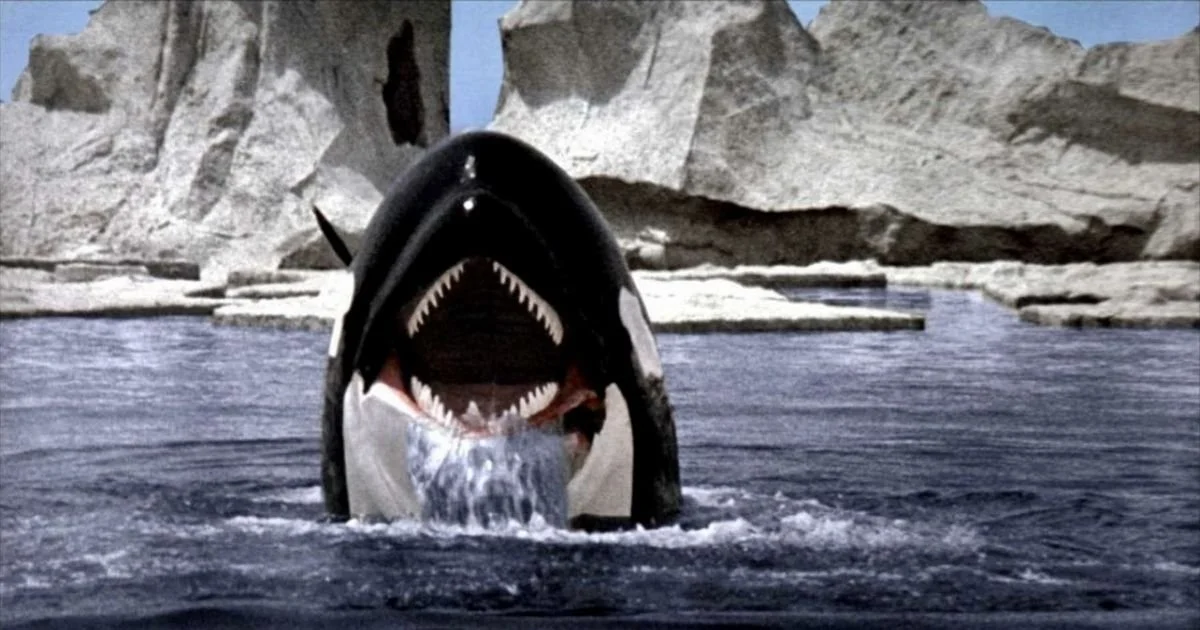
A killer whale slasher with a revenge arc, high-pedigree talent, and a mean streak a mile wide, Orca (1977) might just be the greatest Jaws clone you’ve never seen. Released barely two years after Spielberg rewrote the rules of the summer blockbuster, Orca arrived during a brief but feverish period when Hollywood believed that if one big fish worked, a whole ocean of them would too. What makes Orca fascinating isn’t that it tried to copy Jaws—that was inevitable—but that it zigged so hard into operatic cruelty, mythic revenge, and outright nihilism that it became something stranger, colder, and arguably more haunting.
The confidence behind the film was almost comical. Produced by Dino De Laurentiis, a man never known for modest expectations, Orca was positioned as a serious contender to outgross Jaws itself. On paper, you can see why anyone might believe that. The film stars Richard Harris, fresh off prestige roles and bringing Shakespearean gravitas to a genre picture. Charlotte Rampling adds arthouse credibility, while Will Sampson, later iconic in One Flew Over the Cuckoo’s Nest, lends spiritual weight. Behind the camera is Michael Anderson, director of Around the World in 80 Days. Even Ennio Morricone shows up to score the film, delivering one of the most emotionally charged soundtracks ever written for a movie about an angry sea mammal.
But Orca’s true secret weapon is its willingness to be cruel in ways Jaws never was. Spielberg’s shark is a force of nature—terrifying, yes, but ultimately amoral. Orca dares to make its killer whale personal. The inciting incident is shockingly brutal: Harris’s sea captain Nolan accidentally harpoons a pregnant female orca, hauling her aboard while her mate watches helplessly. When the fetus spills onto the deck, Orca crosses a line most creature features wouldn’t even approach. From that moment on, this is no longer a movie about survival; it’s about vengeance.
The male orca that follows is not just a monster, but a grieving intelligence. The film goes out of its way to emphasize the whale’s cunning, memory, and capacity for suffering. This is where Orca quietly becomes more radical than its peers. Instead of reassuring audiences that humans can conquer nature through ingenuity and teamwork, it suggests that human cruelty creates consequences that intelligence and firepower cannot undo. Nolan isn’t being punished for hubris alone—he’s being hunted for a sin.
Structurally, Orca leans hard into slasher logic. The whale stalks Nolan across oceans and ice, picking off crew members with methodical brutality. There’s a sadistic pleasure in how the film escalates, culminating in the orca setting off an oil refinery explosion, because apparently this whale understands industrial infrastructure and has had enough of capitalism. It’s ridiculous, yes—but it’s also deeply committed to its own worldview. The orca is not random; every act of destruction is deliberate.
What truly elevates Orca, though, is its ending, which remains one of the bleakest in 1970s genre cinema. The final confrontation, staged amid Arctic ice floes, abandons any pretense of triumph. When Nolan ultimately kills the whale, it’s not a victory. The orca, mortally wounded, sings—a sound meant to echo grief, loss, and accusation. Nolan, realizing the enormity of what he’s done, essentially accepts death as penance, allowing himself to be dragged into the freezing water. The movie ends not with relief, but with quiet devastation.
This is where Orca fully separates itself from Jaws and its many imitators. There is no sense that balance has been restored, no cheering crowd, no cathartic explosion scored as heroic. Instead, Orca closes on the idea that some wrongs permanently scar both victim and perpetrator. It’s a downbeat, almost moralistic conclusion that feels more aligned with Greek tragedy than popcorn thrills.
Time has been kind to Orca, even if box office history was not. What once seemed like a grim, overly serious Jaws knockoff now plays as a uniquely nasty artifact of 1970s cinema—a decade unafraid of ambiguity, cruelty, and despair. With its prestige cast, operatic score, and refusal to let humanity off the hook, Orca stands as a reminder that imitation doesn’t always mean dilution. Sometimes, it means pushing an idea so far into the abyss that it becomes unforgettable.