
The Shallows at 10: Celebrating a decade of the greatest post-JAWS shark thriller
Ten years ago, a lone surfer, a secluded Mexican beach and a relentless great white shark combined to create one of the most effective shark thrillers since Steven Spielberg's JAWS.
Released in the summer of 2016, The Shallows (2016) arrived more than four decades after Spielberg's masterpiece had first terrified cinema audiences. By then, the shark movie had become a genre dominated by increasingly outrageous premises, oversized predators and direct-to-video imitations.
But director Jaume Collet-Serra had something different in mind.
Rather than attempting to outdo JAWS with a bigger shark, a larger cast or more elaborate destruction, The Shallows returned to the fundamentals of survival horror: one person, one predator and an almost impossible struggle to stay alive.
Starring Blake Lively in one of her most physically demanding performances, the film proved that audiences could still be frightened by the simple sight of a dorsal fin cutting through the water.
As The Shallows celebrates its tenth anniversary in 2026, The Daily Jaws looks back at the making of this modern shark thriller, its connection to Spielberg's classic and why it remains one of the finest examples of the genre.
A simple premise with terrifying possibilities
At the centre of The Shallows is Nancy Adams, a medical student struggling with the recent death of her mother.
Seeking a connection with her mother's past, Nancy travels to a remote beach in Mexico where her mother once surfed.
The location is breathtaking. Crystal-clear water, rolling waves and an apparently deserted stretch of coastline create the perfect setting for a peaceful surfing adventure.
But paradise quickly becomes a nightmare.
While surfing alone, Nancy discovers the carcass of a humpback whale, unaware that a great white shark is feeding nearby.
The shark attacks, leaving Nancy severely injured and stranded on a small rocky outcrop approximately 200 yards from shore.
With the tide rising, her wounds worsening and the shark patrolling the surrounding waters, Nancy faces an almost impossible choice: remain where she is and risk drowning, or attempt to reach safety through the predator's hunting ground.
It's a remarkably straightforward premise, but one that provides the foundation for an extraordinarily effective thriller.
Unlike many shark movies, The Shallows doesn't need a large cast of potential victims. Instead, the entire film rests on whether its central character can survive.
And crucially, audiences care whether she does.
Blake Lively: Carrying an entire shark movie
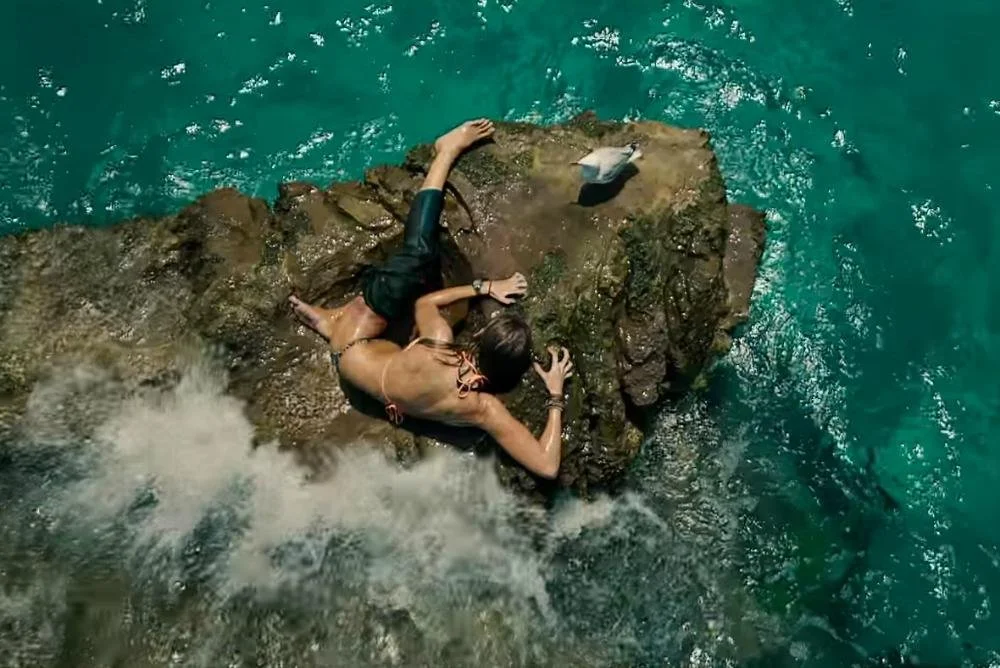
One of the film's greatest achievements is Blake Lively's performance.
Best known at the time for her role in Gossip Girl and films including The Age of Adaline, Lively was faced with an unusually demanding challenge.
For much of The Shallows, she is the only human character on screen.
There are long stretches with very little dialogue, requiring her to communicate Nancy's fear, exhaustion, determination and pain almost entirely through physical performance.
And it's a challenge she meets convincingly.
Nancy is neither an invincible action hero nor a helpless victim. She's intelligent, resourceful and understandably terrified.
Her medical training becomes an important part of her survival, particularly during the film's gruelling sequence in which she attempts to treat her own injuries.
The audience watches her improvise solutions, calculate risks and gradually overcome the emotional paralysis that has followed her mother's death.
That emotional journey gives the film an additional dimension beyond its shark attacks.
Nancy isn't simply fighting to escape the water. She's rediscovering her determination to live.
In an August 2016 interview with Little White Lies, Collet-Serra explained that his priority was making the audience connect with Nancy's transformation, rather than allowing the film's technical spectacle to overwhelm her story.
A beautiful location hiding a deadly secret
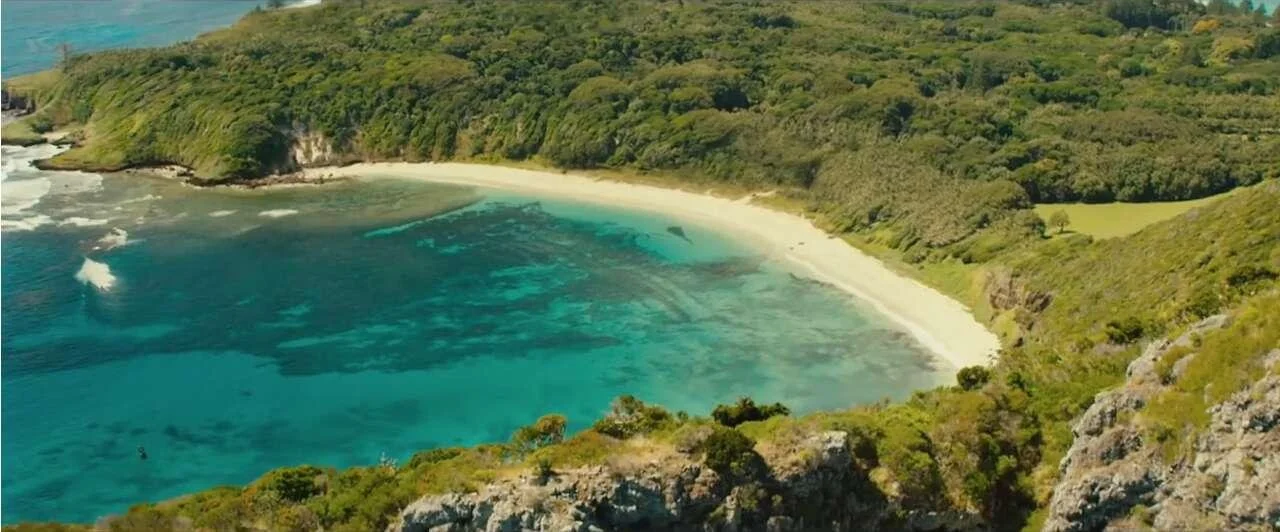
Although the story takes place in Mexico, much of the location filming was undertaken on Lord Howe Island, a spectacular island off the coast of New South Wales, Australia.
Its dramatic volcanic landscape, clear waters and isolated beaches provided the perfect backdrop.
But filming in such a remote location presented considerable difficulties.
The weather could change rapidly, while the practical challenges of working with water, waves and a small cast made the production particularly demanding.
In a 2016 interview with the Chicago Sun-Times, Collet-Serra described the island itself as an essential character in the film, explaining that its distinctive appearance justified the difficulties involved in shooting there. - Chicago Sun-Times
Interestingly, much of the finished film was not actually photographed in the open ocean.
Collet-Serra confirmed that extensive sequences were shot in a water tank, with visual effects used to blend the performances and environments into a convincing tropical setting - Little White Lies
The result is a film that makes extraordinary use of colour.
The bright blues and greens of the ocean create an almost idyllic atmosphere, making the sudden appearance of blood in the water particularly shocking.
It's a visual contrast that Collet-Serra deliberately pursued.
The beauty of the setting initially invites the audience into the water, only to become increasingly threatening as Nancy realises how vulnerable she is.
Creating the shark: A digital predator with a physical presence
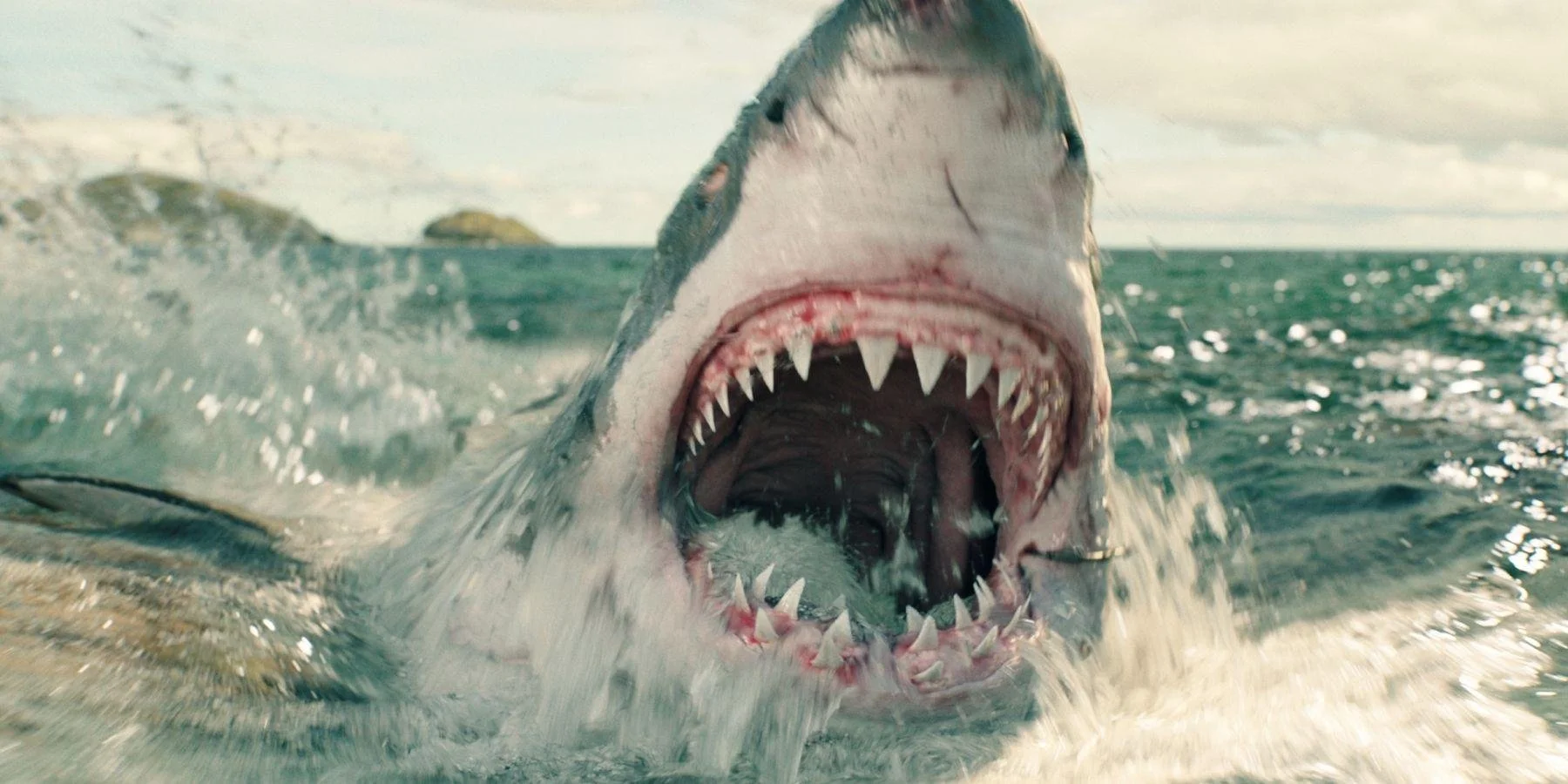
Of course, no shark movie can succeed without a convincing shark.
And in The Shallows, the filmmakers faced the same fundamental challenge that has confronted directors since JAWS: how do you make an audience believe that an enormous great white shark is really there?
Where Spielberg famously relied on mechanical sharks, Collet-Serra embraced modern digital technology.
The shark was created using computer-generated imagery, with the visual effects team carefully integrating the predator into footage of Blake Lively and the surrounding water.
In an interview shortly after the film's release, Collet-Serra explained that the production had to film water disturbances and other practical reference elements without having a finished shark to work with.
Visual effects company Important Looking Pirates was responsible for developing the digital great white, including its anatomy, movements and interaction with the underwater environment.
The team created sophisticated simulations for bubbles, blood, sediment and water displacement, allowing the shark to interact more convincingly with its surroundings.
The finished creature is enormous, powerful and visually imposing.
Although some of its behaviour is exaggerated for dramatic effect, the shark remains a formidable screen presence.
And, like Spielberg before him, Collet-Serra understands that the predator is often most frightening when it isn't visible.
A sudden disturbance beneath the surface or the possibility of something approaching from the darkness can be just as effective as an elaborate attack sequence.
Steven Seagull: The film's unlikely second star
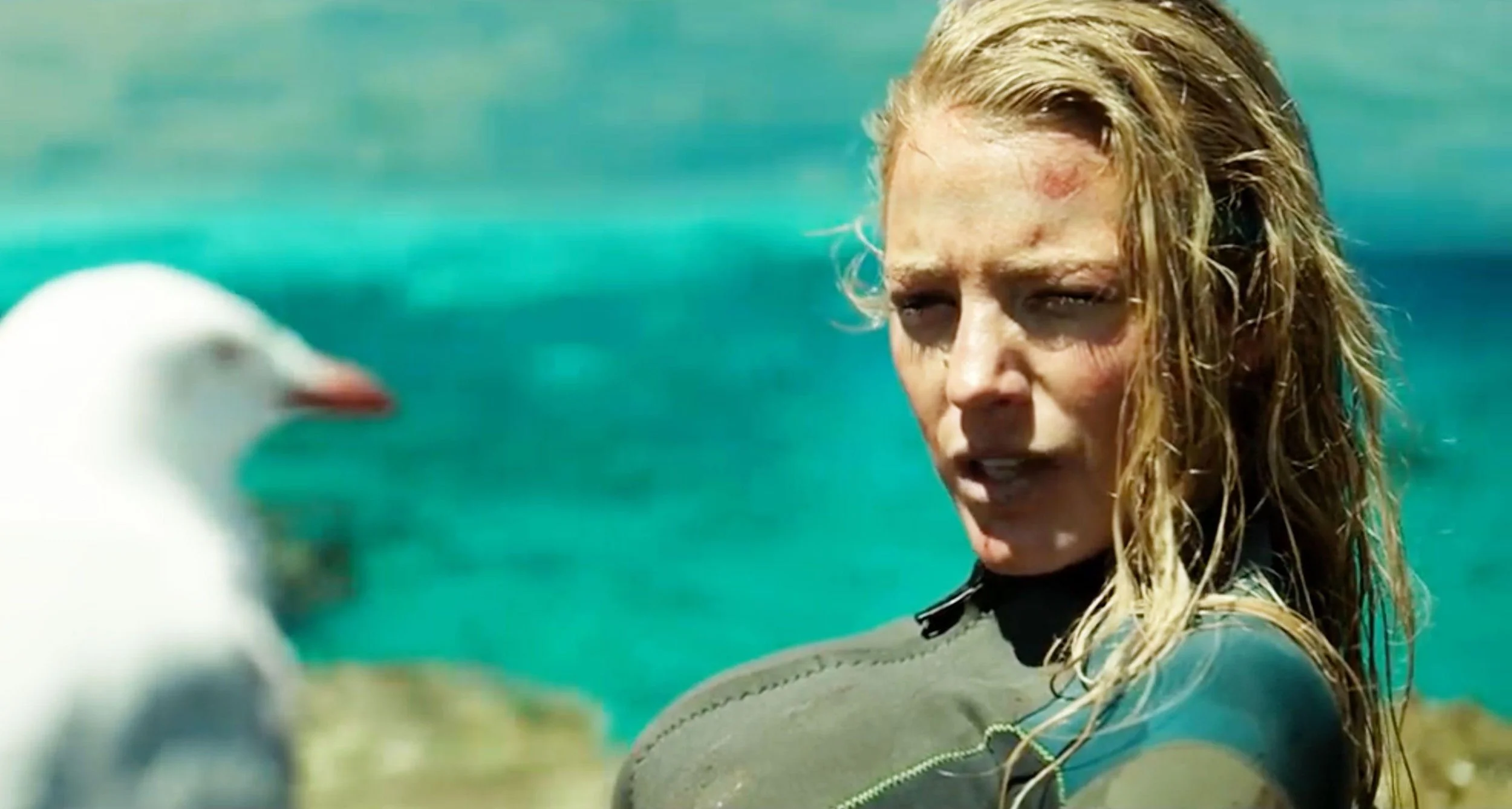
For all its tension and terror, The Shallows also contains one of the most unexpected supporting characters in shark movie history.
A wounded seagull.
Stranded on the same rock as Nancy, the bird becomes her unlikely companion during the ordeal.
Affectionately nicknamed Steven Seagull, the bird provides occasional moments of humour and companionship in an otherwise relentlessly tense film.
The name is, of course, a playful reference to action star Steven Seagal.
But the character serves a more important purpose.
With Nancy isolated from other people, the seagull gives her someone to interact with, helping the audience understand her thoughts and emotional state without relying on lengthy monologues.
The bird also reinforces one of the film's underlying themes: the struggle for survival is not unique to human beings.
Both Nancy and her feathered companion are injured, vulnerable and attempting to escape a dangerous environment.
Steven Seagull proved memorable enough to receive an on-screen credit under the name Steven "Sully" Seagull.
For a film dominated by one human performer and a computer-generated shark, it's remarkable how much personality a small seabird manages to contribute.
The JAWS connection: Different films, the same primal fear
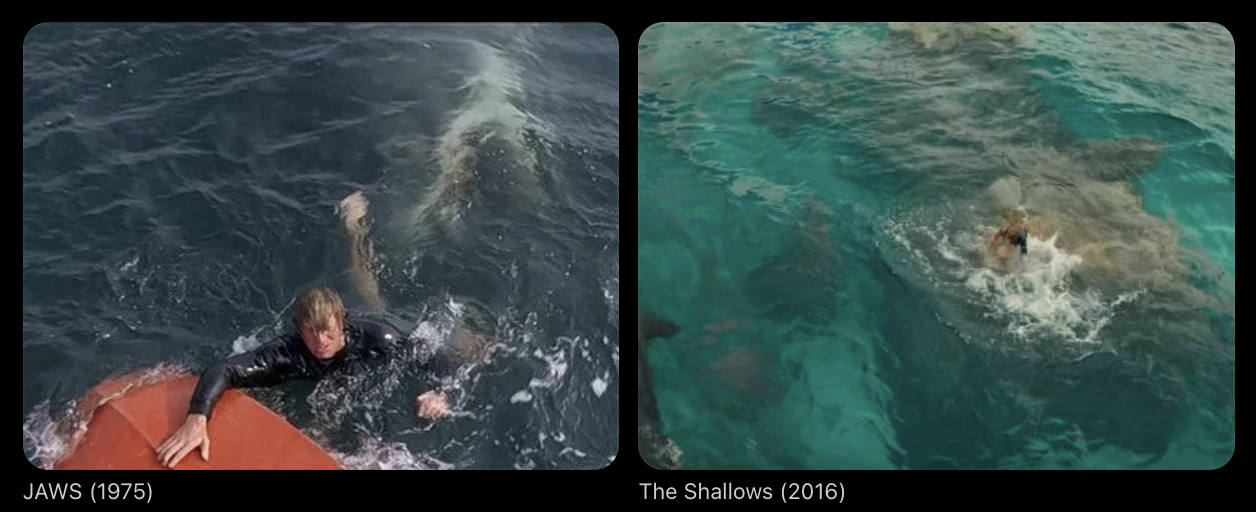
Any film featuring a great white shark inevitably invites comparisons with JAWS.
But The Shallows shares more with Spielberg's classic than simply its choice of predator.
Both films understand the importance of geography.
In JAWS, the audience becomes familiar with the beaches of Amity Island, the geography of the Orca and the limited space in which Brody, Quint and Hooper must confront their adversary.
In The Shallows, the geography is even more restricted.
Nancy can see the beach. She knows where safety lies. The problem is getting there.
That short distance becomes an almost insurmountable obstacle.
Both films also use the ocean's surface as a barrier between what the audience can see and what it fears might be lurking below.
A dorsal fin becomes a warning.
A shadow becomes a threat.
And an apparently empty stretch of water becomes a source of unbearable suspense.
There is, however, one important difference.
Spielberg's shark terrorises an entire community, while Collet-Serra's predator is focused almost exclusively on one person.
JAWS is a story about collective fear, responsibility and the consequences of ignoring danger.
The Shallows is a much more intimate story about individual survival.
Collet-Serra also framed the shark as an animal defending its territory rather than a creature deliberately seeking out humans, a distinction he discussed during the film's original publicity campaign.
Neither film is a realistic representation of typical great white shark behaviour, but both use the predator to explore something deeply human: our fear of being powerless against nature.
A surprise box-office success
Released in US cinemas on 24 June 2016, The Shallows proved that a relatively modestly budgeted shark thriller could still attract a substantial theatrical audience.
The film opened with approximately $16.8 million domestically and went on to earn more than $55 million in the United States and Canada.
Its worldwide theatrical gross eventually reached approximately $119.1 million.
Those numbers were particularly impressive for a film built around a single principal character, a limited number of locations and a straightforward survival premise.
The success demonstrated that audiences still had an appetite for shark thrillers, provided the filmmakers could deliver compelling characters, convincing suspense and a strong cinematic experience.
It also helped reinforce the commercial potential of the genre in the years that followed, with films such as 47 Meters Down (2017) and The Meg (2018) finding their own audiences.
The financial success of The Shallows was proof that, more than 40 years after JAWS, sharks could still draw audiences into cinemas.
Ten years later: Does The Shallows still hold up?
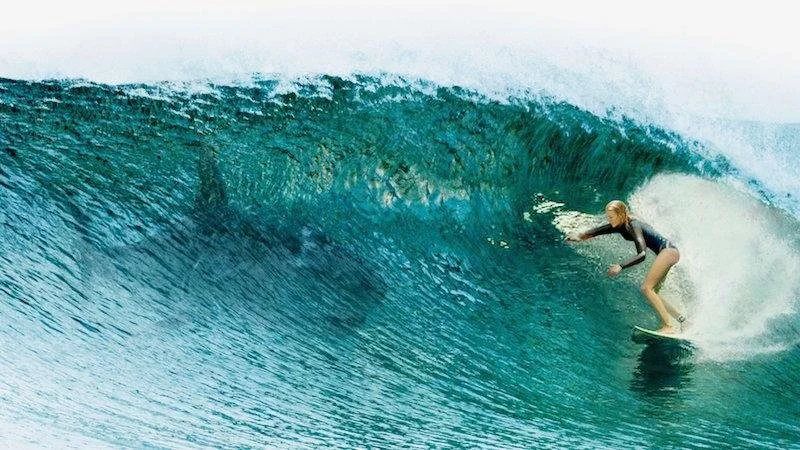
A decade after its release, The Shallows remains one of the most effective shark thrillers of the 21st century.
Its greatest strength is its restraint.
At just 86 minutes, the film wastes very little time establishing its premise before placing Nancy in danger.
There are no unnecessary subplots, no sprawling ensemble of characters and no elaborate mythology explaining why the shark has appeared.
Instead, the audience is presented with a straightforward question: how can one injured woman survive when safety is tantalisingly close but seemingly impossible to reach?
The film isn't without its flaws.
Its shark displays a level of aggression and persistence that stretches credibility, while the climactic confrontation moves firmly into Hollywood spectacle.
But these shortcomings are relatively minor when measured against the film's considerable achievements.
Blake Lively's performance remains compelling, the cinematography is beautiful and the central survival scenario continues to generate genuine suspense.
Perhaps most importantly, The Shallows understands that an effective shark movie needs more than a frightening predator.
It needs a character whose survival matters to the audience.
And that's something Spielberg understood back in 1975.
The legacy of The Shallows
Ten years after its release, The Shallows deserves recognition as a significant entry in the history of shark cinema.
It demonstrated that filmmakers didn't need to reinvent the genre with increasingly ridiculous premises or gigantic prehistoric creatures.
Sometimes all that's required is a believable character, an isolated location and the terrifying possibility of something moving beneath the surface.
Its success also helped remind Hollywood that shark movies could be commercially viable theatrical releases rather than simply low-budget curiosities.
For fans of JAWS, the film offers something particularly satisfying: a modern shark thriller that respects the fundamentals of suspense while establishing its own identity.
It doesn't attempt to replace Spielberg's masterpiece.
Nor could it.
But it understands why JAWS worked, and uses many of those same storytelling principles to deliver a frightening, entertaining and surprisingly emotional experience.
A decade later, The Shallows remains one of the finest shark movies made since JAWS.
And if there's one thing Nancy Adams taught us, it's that even when you're only 200 yards from shore, the distance between life and death can feel like an entire ocean.
Happy 10th anniversary, The Shallows!
If you would like to write for The Daily Jaws, please visit our ‘work with us’ page
For all the latest Jaws, shark and shark movie news, follow The Daily Jaws on Instagram, Twitter and Facebook.