
Mrs. Kintner: An older mother and the quiet tragedy of JAWS
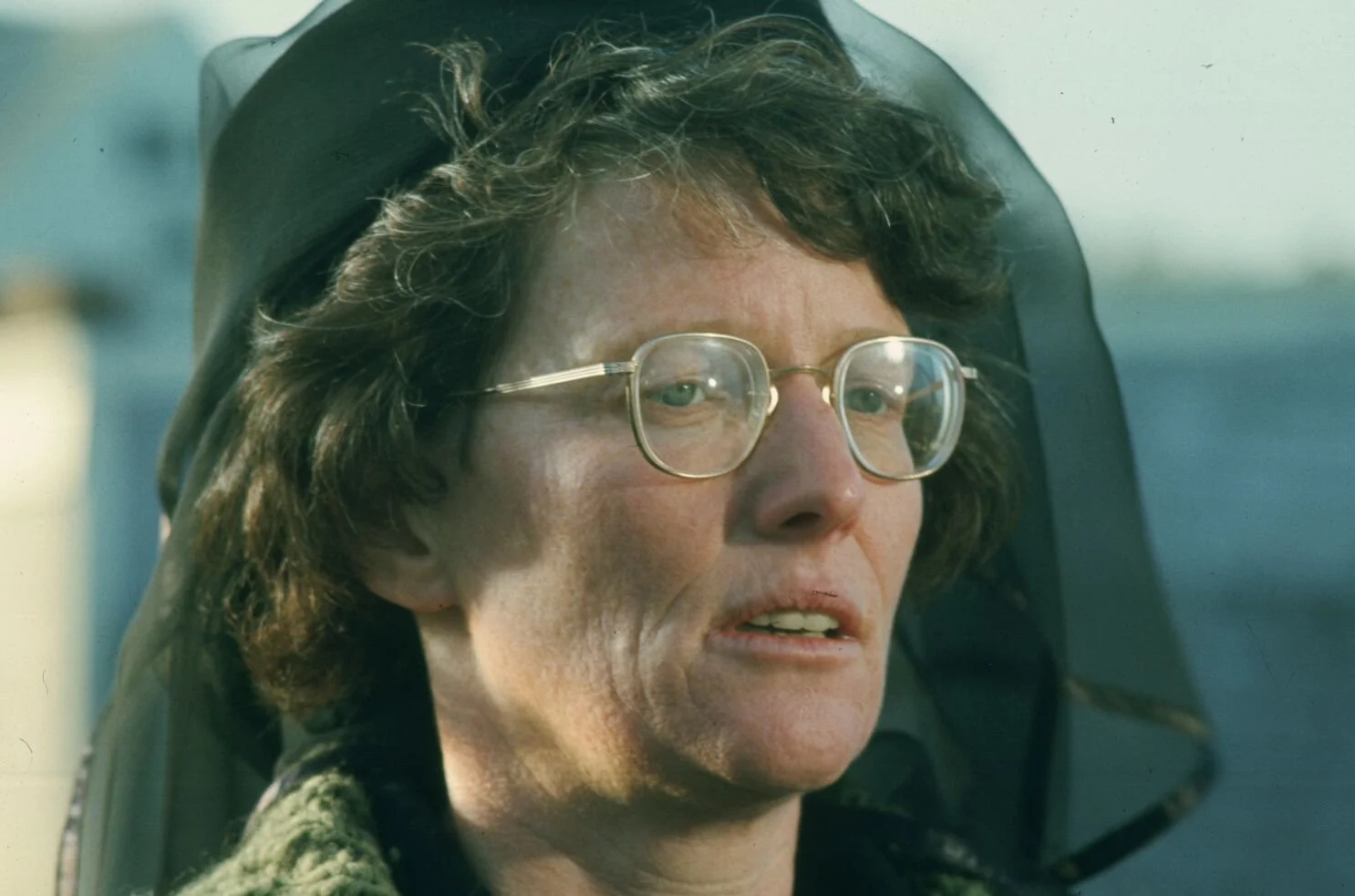
In Jaws (1975), the death of Alex Kintner is often discussed as a narrative turning point—the moment when the film’s danger becomes undeniable and Chief Brody’s moral crisis fully ignites. Yet one of the most quietly devastating aspects of the scene is not the shark, nor even Alex himself, but his mother. Mrs. Kintner appears older than the typical cinematic mother of a young child, and that choice—intentional or not—deepens the emotional and thematic weight of Alex’s death in ways that ripple through the rest of the film.
That impact is inseparable from the woman who played her: Lee Fierro.
Why an Older Mother
There are several overlapping explanations—narrative, symbolic, and socio-cultural—for why Mrs. Kintner is portrayed as an older woman.
Visual shorthand for vulnerability and authority
In a film that relies heavily on visual storytelling, age functions as an instant emotional cue. An older mother reads as more fragile, more worn by life, and less buffered by time. Her grief feels heavier because it appears final—she does not seem like someone who will “start over.” At the same time, her age gives her moral authority. When she confronts Brody later, her words land not as hysteria but as judgment. She looks like someone who has already lived a long life and now must carry this loss for whatever remains of it.
A generational inversion of expectations
Typically, cinema conditions us to expect parents to bury their parents, not their children. An older mother losing a young son intensifies this inversion. It feels doubly wrong: not only has the natural order been violated, but it has happened at a stage of life when loss is supposed to be receding, not expanding. Mrs. Kintner’s age underscores that Alex was not just a child—he may have been her last child, or her only remaining source of daily purpose.
Postwar motherhood and late-life children
Viewed through a historical lens, Mrs. Kintner may represent a generation shaped by the Great Depression and World War II. Many women delayed or interrupted childbearing due to economic hardship, loss of partners, or instability. Alex could plausibly be a late-in-life child—one born after years of waiting, loss, or compromise. If so, his death does not merely end a life; it erases a long-deferred hope.
Lee Fierro: Lived Experience and Emotional Gravity
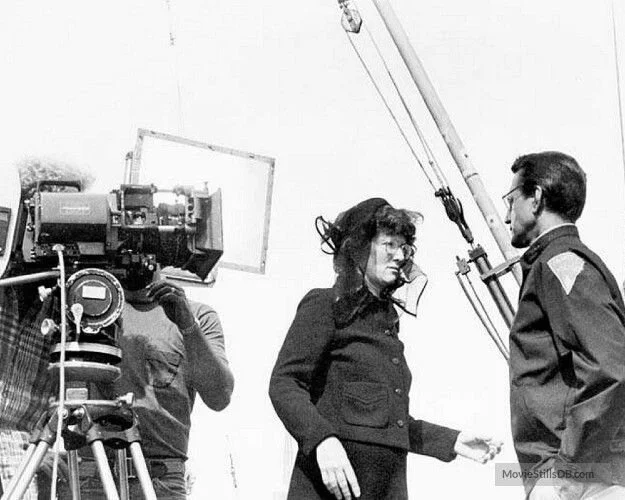
Lee Fierro was not a Hollywood fixture or a polished studio actress. She was a trained stage performer and acting teacher, deeply rooted in theater rather than film, and at the time of Jaws she was living on Martha’s Vineyard, where the movie was shot. Spielberg cast many local residents in small roles, and Fierro’s presence carries that authenticity. She does not feel “performed” in the way many minor film characters do; she feels lived-in.
Her background in theater—particularly community and repertory theater—shows in her restraint. Fierro does not overplay grief. She internalizes it. The now-iconic slap of Brody is shocking not because it is melodramatic, but because it is preceded by such controlled pain. Her delivery is flat, exhausted, and devastatingly human. This is not a woman in the first explosion of loss; this is a woman already hollowed out by it.
Fierro’s own age and demeanor amplify the effect. She brings a natural gravity that a younger actress might not have conveyed without exaggeration. Her face suggests history—years of caregiving, disappointment, endurance. When she says, “You knew there was a shark out there,” it feels less like accusation than like a moral verdict delivered by someone who no longer has the energy for rage.
The Implications of Alex’s Death
Alex’s death is not just tragic—it is existentially devastating for Mrs. Kintner.
The loss of future meaning
For an older parent, a child often represents continuity: birthdays yet to come, graduations, marriages, grandchildren. Alex’s death collapses that future in an instant. What remains is not only grief but a profound temporal emptiness. Her life is now oriented around a past that cannot be altered rather than a future that can be anticipated.
Isolation rather than communal mourning
Unlike Brody, whose guilt is processed within a family and a professional role, Mrs. Kintner is strikingly alone. We never see a spouse, extended family, or support system. Her age amplifies this isolation. There is an unspoken fear that she will grieve in silence long after the town moves on, the beaches reopen, and summer resumes.
Moral displacement of rage
Her confrontation with Brody is one of the film’s most haunting scenes precisely because it is restrained. She does not scream; she accuses. An older mother’s anger carries a different quality—it is not impulsive but settled, almost ceremonial. Through Fierro’s performance, grief hardens into moral clarity: someone allowed this to happen. In doing so, Mrs. Kintner becomes the film’s ethical fulcrum, reminding both Brody and the audience that bureaucratic delay has human costs.
A Subtle Horror Beyond the Shark
What makes Mrs. Kintner so affecting is that her tragedy exists outside the mechanics of the thriller. Sharks can be killed. Beaches can be closed. Summer can end. But nothing in the film can undo what has been done to her. Her age ensures that this loss is not one chapter in a long story—it may be the final defining event of her life.
Lee Fierro’s performance anchors this reality. She appears briefly, leaves an indelible mark, and disappears—much like the kind of grief the film otherwise avoids confronting. In that sense, Mrs. Kintner represents a quieter, more enduring horror than the shark itself. The shark kills quickly and moves on. The town adapts. But she must live with the absence, day after day, with fewer years ahead than behind, carrying a grief that has nowhere to go.
By presenting Alex Kintner’s mother as an older woman—and by casting an actress capable of embodying that weight—Jaws becomes not just a story about fear or survival, but about the uneven distribution of loss, and how a single moment at the shoreline can echo for the rest of a life.
If you would like to write for The Daily Jaws, please visit our ‘work with us’ page
For all the latest Jaws, shark and shark movie news, follow The Daily Jaws on Instagram, Twitter and Facebook.