
Jaws at Fifty! A Field Notebook on Fear, Fabrication, and the Cut That Changed Cinema
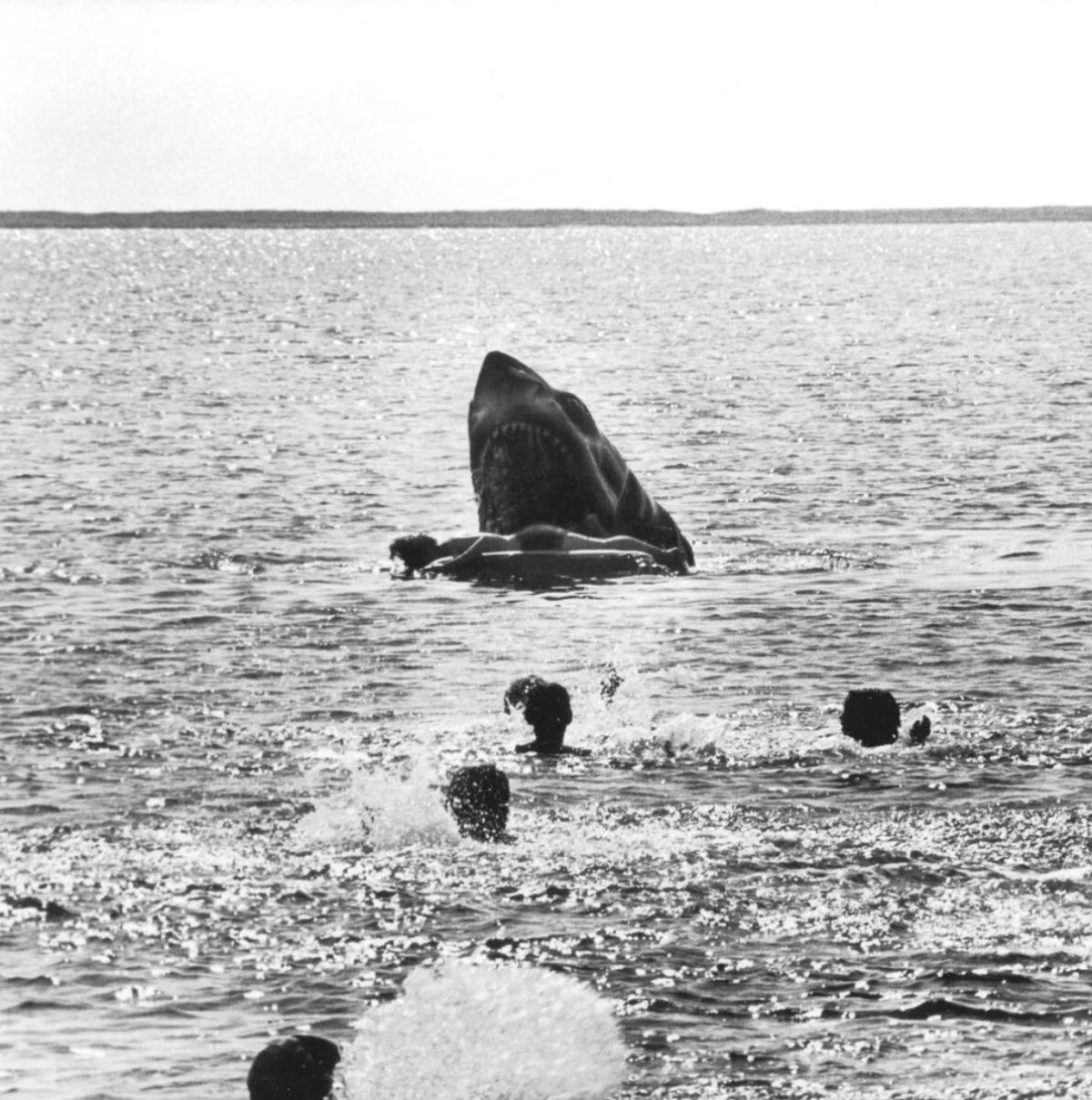
I keep circling back to the malfunctioning shark. That old production legend that the beast did not play ball, so Spielberg had to let sound and suggestion do the heavy lifting. Whether you first heard it in a making-of special or from a friend who swears their uncle worked as a grip, the gist holds water.
Half a century on, that constraint still reads as intent. You feel it in the edit, in the long drift to a buoy bell, in Brody's flinch before the dolly zoom tightens like a vice. Also, the anniversary attention this year only sharpens the edges of that memory.
Method Section: The Context and Corpus
I pulled a small stack of recent material to see how the film has been framed over the past 50 years. These include news hits that fold the past into the present and interviews that lift the hood on craft and myth. Now, it is a whole ecosystem.
Here, you get exhibition pieces featuring original props and behind-the-scenes artifacts, reintroduced to the bright lights. Also, you get soundtrack remasters that treat the score like an archaeological site that has been cleaned and re-presented. In fact, each artifact refuels the same thesis.
To be honest, Jaws is an editing movie first, a sound movie second, and a shark movie after that.
Results Section: The Public Memory We Keep Building
Talk to five fans and you will map five different entry points. Some came in through a TV broadcast, others via vinyl hiss and timpani, a few from museum glass staring back.
The throughline is that hush before the bite. You watch a crowd looking at nothing in particular, yet you feel the pressure. That is the big trick. It is also why, in a stranger corner of the internet, the phrase bitcoin casino poker passes by your feed and, weirdly, you still hear two notes rising from a black screen. In fact, association is sticky like that.
Analysis Section: The edit, the Eye, and the Thermometer
Numbers get tossed around a lot this year. The first to break the hundred-million barrier in the U.S. after 38 days, three Oscars, and a summer forever renamed.
Of course, it is a useful context, but watch the beach sequence again and forget the ledger. The real currency is delayed. In fact, Verna Fields cuts the air the way a surgeon preserves a margin. You sit with Brody as foreground bodies occlude the horizon. Then, a hat crosses the frame, and a scream that is not the scream.
You look, then look again. Here, negative space is an instrument. This is what the anniversary coverage keeps circling around, sometimes implicitly, head-on, in their retrospectives and explainers.
Discussion Section: Three Men in a Boat (One Thesis About American Fear)
The big three - Quint, Hooper, and Brody. It is a triangle of class, method, and obligation. Basically, the boat turns into a lab, then a church, and then a courtroom. Every monologue is a deposition, and every barrel is a vote of no confidence in certainty.
Moreover, you can watch newer interviews with filmmakers and historians and hear how the film continues to absorb our anxieties. It does so by swapping out specifics while holding onto structure.
Meanwhile, industry veterans talk about collaboration as the real shark-proof cage. Also, fans remember the ITV broadcast as if it were a communal rite. In fact, the film keeps giving people language for risk.
Findings in the Wild: Relics, Remasters, and Revenants
In general, artifacts matter because they anchor myth to metal. For instance, clapperboards hit auction blocks and fetch eye-widening numbers. Also, soundtracks are remixed into new formats so the old dread gets new teeth.
Moreover, exhibitions stage the familiar objects under careful light, and, for a second, you are back on the Vineyard, watching fiberglass menace pretend to be flesh.
All of it argues that the film is not done speaking. Moreover, it keeps calibrating our sense of scale, from prop close-ups to amphitheater subwoofers. Even the title cards of news briefs read like tiny waves lapping at a long shoreline.
Limitations Section: When Memory Fogs the Lens!
We romanticize production chaos because it makes the final cut feel fated. But the cleaner truth is more practical. For instance, shortages of time, money, and functional machinery create problem-solving habits.
In general, you see those habits formalized across the franchise’s adjacent stories, restorations, and retrospectives. Also, the anniversary interview series leans into this, bringing together craftspeople, scholars, and famous fans around a figurative table.
This way, what emerges is not just lore, but workflow. It is a reminder that discipline, not legend, is what keeps a fin sharp.
The Water Is Still Cold!
Fifty years on, the film’s most modern quality is restraint. Essentially, the camera waits, the cut withholds, and the music says what the prop cannot. Also, that grammar has aged better than any rubber skin possibly could.
You feel these in the renewed screenings and the objects resurfaced for curated rooms. Moreover, you hear it in new mixes that make old notes bloom. Furthermore, you read it between the lines of every retrospective headline this season.
Less shark and more cinema! That is the legacy, and the work that follows from it.