
Why Jaws Still Feels More Suspenseful Than Modern Shark Movies
More than half a century after its release, Jaws remains the standard against which shark movies are measured. Its mechanical effects are visibly products of another era, its action scenes are relatively restrained, and the shark spends much of the film outside the frame. Yet few modern productions generate the same sustained tension.
The film’s power comes from a principle that contemporary spectacle sometimes forgets: suspense depends less on what an audience sees than on what it anticipates. Steven Spielberg turns open water into a space of uncertainty, using sound, editing and human behaviour to make a threat feel present before it becomes visible.
Later shark films have benefited from digital effects, underwater photography and faster production methods. These tools can create larger creatures and more elaborate attacks, but technical freedom does not automatically produce fear. Jaws remains effective because every cinematic choice controls what the viewer knows, when they know it and how long they must wait for confirmation.
The Unseen Shark Activates the Audience’s Imagination
The shark’s limited screen time is often explained as a practical response to an unreliable mechanical model. That production problem became the film’s greatest creative advantage. Instead of showing the animal repeatedly, Spielberg suggests its presence through point-of-view shots, moving objects, reactions and sudden changes in the water.
Modern audiences move quickly between streaming platforms, social feeds, games and international services such as melbet, which has increased competition for immediate attention. Jaws takes the opposite approach: it asks viewers to wait. By delaying visual confirmation, the film makes them search every part of the frame for movement.
| Suspense Technique | Information Given to the Viewer | Psychological Effect |
|---|---|---|
| Underwater point of view | Something is approaching from below | Creates identification with the threat |
| Empty surface shots | No danger is visible | Encourages constant visual scanning |
| Floating objects | An attack is implied indirectly | Lets the imagination complete the event |
| Character reactions | Fear appears before its cause | Transfers anxiety to the audience |
| Delayed reveal | The shark remains unseen | Builds anticipation rather than surprise |
| Brief appearance | The threat is finally confirmed | Rewards tension without exhausting it |
An unseen threat has no fixed dimensions. Until the shark appears clearly, every shadow or disturbance can represent something larger and more dangerous than an effect could show. The audience becomes an active participant, constructing the monster from incomplete evidence.
Many later films reveal their creatures early because trailers, digital effects and rapid storytelling encourage immediate spectacle. Once the audience has examined the monster repeatedly, however, uncertainty declines. The creature may still be dangerous, but it is no longer mysterious.
Sound Gives the Threat a Presence Before It Appears
John Williams’s central musical motif is built from remarkably simple material. Its repeated notes do not describe the shark’s appearance; they communicate movement and intention. As the rhythm accelerates, the audience senses that the distance between predator and victim is closing.
Digital entertainment is now frequently designed to be portable, with viewers switching between video, messages and mobile services such as melbet apk during the same session. Jaws rewards a different kind of attention because its soundtrack carries narrative information. Looking away does not remove the threat; the music announces that something has entered the scene.
The score functions almost like an additional character. It establishes a rule: when the motif begins, the shark is actively hunting. Spielberg can then manipulate that expectation by withholding the music during selected moments, making an unexpected appearance more disturbing.
Sound contributes to suspense through several layers:
The musical motif signals deliberate movement.
Water and splashing obscure precise information.
Distant voices emphasise a character’s isolation.
Sudden silence removes emotional guidance.
Mechanical sounds make the boat feel vulnerable.
Dialogue reveals fear before the action escalates.
The film also knows when not to use music. Silence creates space for doubt, while ordinary beach sounds make danger feel as though it is intruding into a recognisable environment. The contrast between everyday noise and the score’s growing pulse turns a public beach into a psychological trap.
Editing Controls Information Rather Than Simply Increasing Speed
Contemporary action editing often equates intensity with shorter shots. Jaws demonstrates that suspense depends on the relationship between shots, not merely their duration. The film alternates between what characters see, what they fail to notice and what the audience suspects is happening outside their field of vision.
The beach sequence is a masterclass in divided attention. Chief Brody watches the water while swimmers, conversations and passing bodies interrupt his view. The editing places the audience inside his anxiety: every obstruction might conceal the beginning of an attack.
| Editing Choice | Narrative Function | Resulting Tension |
|---|---|---|
| Obstructed point of view | Limits Brody’s view of the water | Makes ordinary movement suspicious |
| Repeated false alarms | Delays the real attack | Trains viewers to anticipate danger |
| Reaction before cause | Shows fear first | Forces the audience to imagine what happened |
| Alternating perspectives | Separates knowledge among characters | Creates dramatic irony |
| Longer preparation shots | Establishes spatial relationships | Makes later disruption easier to understand |
| Sudden compression | Accelerates at the moment of crisis | Converts suspense into panic |
Clear geography is crucial. The audience generally understands where the swimmers, boat and shoreline are located. Because the spatial relationships are established, small changes become meaningful. Confusion would weaken the threat; clarity allows viewers to measure how close it is.
This is one reason the final confrontation remains effective despite its age. The Orca is not merely a background for action. Its shrinking space, failing equipment and distance from land create a structure in which every new problem reduces the characters’ options.
Human Conflict Makes the Shark More Than a Monster
Jaws does not spend all its time preparing attacks. Much of the story concerns denial, responsibility, expertise and economic pressure. Brody wants to protect the community, Mayor Vaughn fears the financial cost of closing the beaches, and Quint treats the shark as both professional challenge and personal reckoning.
These conflicts prevent the film from becoming a repetitive sequence of encounters. The shark exposes weaknesses that already exist within the community. Political leaders minimise danger, residents resist disruption, and specialists disagree over how the problem should be understood.
The three men aboard the Orca also represent contrasting responses to the threat:
Brody relies on caution and public responsibility.
Hooper approaches the shark through science and technology.
Quint trusts experience, instinct and personal authority.
Their methods initially compete rather than complement one another.
Isolation eventually forces them to recognise their dependence on the group.
The famous conversation about the USS Indianapolis deepens this structure. Quint’s behaviour stops looking like simple arrogance and becomes connected to trauma. The shark is no longer only an animal he intends to kill; it belongs to a history he has never escaped.
Modern creature films sometimes treat characters as temporary pieces arranged around elaborate deaths. Jaws makes survival matter because the audience understands the people involved. Suspense becomes stronger when viewers fear not only an attack, but the loss of a specific human relationship.
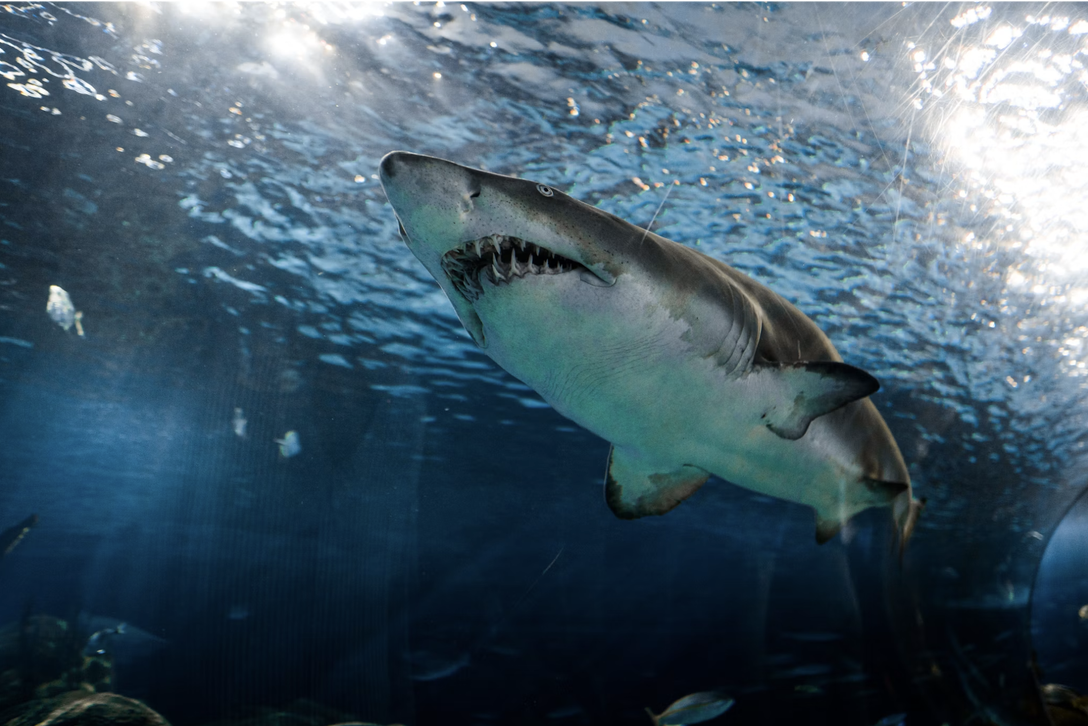
The Film Alternates Restraint With Carefully Timed Spectacle
Jaws is remembered as a frightening film, but it does not maintain the same emotional intensity throughout. Humour, domestic scenes and character interaction release pressure before the next escalation. This rhythm prevents suspense from becoming monotonous.
| Story Phase | Dominant Tone | Purpose |
|---|---|---|
| Opening attack | Immediate vulnerability | Establishes danger without explanation |
| Community response | Conflict and denial | Expands the threat beyond one victim |
| Crowded beach | Controlled anxiety | Builds tension through anticipation |
| Investigation | Procedural uncertainty | Gives the threat physical evidence |
| Voyage on the Orca | Adventure and character drama | Creates attachment before isolation |
| Final confrontation | Escalating survival horror | Pays off earlier preparation |
The shark’s full appearance is effective because the film has earned it. By the time it rises beside the boat, viewers have already imagined its size and power. The reveal does not begin the suspense; it transforms psychological fear into a practical survival problem.
Modern productions often front-load their largest images to capture attention quickly. That strategy can create an impressive opening but leaves fewer opportunities for escalation. Jaws preserves its strongest visual information until it can change the direction of the story.
Practical Limitations Give the Encounters Physical Weight
The mechanical shark was famously difficult to operate, especially in salt water. Although these problems restricted production, the physical effect gave actors and environments something real to interact with. Water displaced around the model, the boat responded to its weight, and lighting affected its surface naturally.
Digital creatures provide advantages that filmmakers in the 1970s could not imagine. They can move faster, appear in wider shots and perform actions that would be impossible with a mechanical model. The difference lies not in whether computer-generated imagery is inherently less convincing, but in how it is integrated.
Effective creature effects usually preserve several physical relationships:
The creature must appear to occupy measurable space.
Water, debris and surrounding objects should respond to its movement.
Actors need consistent sightlines and reactions.
The camera should obey a believable position within the scene.
Damage must continue to affect the environment after the attack.
Jaws benefits from choosing angles that conceal the model’s limitations. The camera rarely invites the audience to inspect the shark without dramatic purpose. Each appearance is brief, obstructed or connected to immediate danger.
Digital effects become less persuasive when they remove all restrictions. A creature that can perform anything at any moment may stop feeling like an animal with mass and behaviour. Limitations, whether practical or deliberately imposed, make action easier to anticipate—and therefore more suspenseful.
Jaws Understands That Fear Begins Before the Attack
The lasting influence of Jaws comes from its understanding of anticipation. Its most frightening moments often occur before violence: a fin that may be approaching, a barrel changing direction or a character staring into water that reveals nothing.
The film also connects a primal fear to an ordinary setting. A beach represents leisure, sunlight and public safety. By introducing danger beneath its surface, Jaws changes how viewers interpret a familiar environment. The ocean remains visually open while becoming psychologically unreadable.
Future shark films will continue using more advanced effects, virtual production and detailed simulations of underwater movement. Those technologies can improve realism, but they cannot replace narrative control. A perfectly rendered shark will not create suspense if the audience sees too much, too early and without emotional context.
Jaws endures because it treats the shark as a source of uncertainty before presenting it as a spectacle. Sound suggests movement, editing restricts knowledge and character conflict raises the cost of every decision. The film does not simply show people facing a predator; it makes the audience feel the long, uncomfortable interval between suspecting danger and finally seeing it.