
Cable Junction: The Incredible True Story Behind the JAWS 2 Finale
When JAWS 2 arrived in cinemas in 1978, audiences returned to the familiar waters of Amity Island for another terrifying encounter with a great white shark. But while the original JAWS had ended with an explosive showdown aboard the Orca, its sequel delivered an altogether different kind of finale.
This time, Police Chief Martin Brody would defeat his underwater adversary using one of the most unusual landmarks in the franchise: Cable Junction.
A lonely electrical installation surrounded by open water, Cable Junction became the setting for one of the sequel's most memorable sequences. Yet behind its dramatic appearance lies an interesting story of filmmaking, Florida locations and the ingenuity required to bring the second JAWS adventure to the screen.
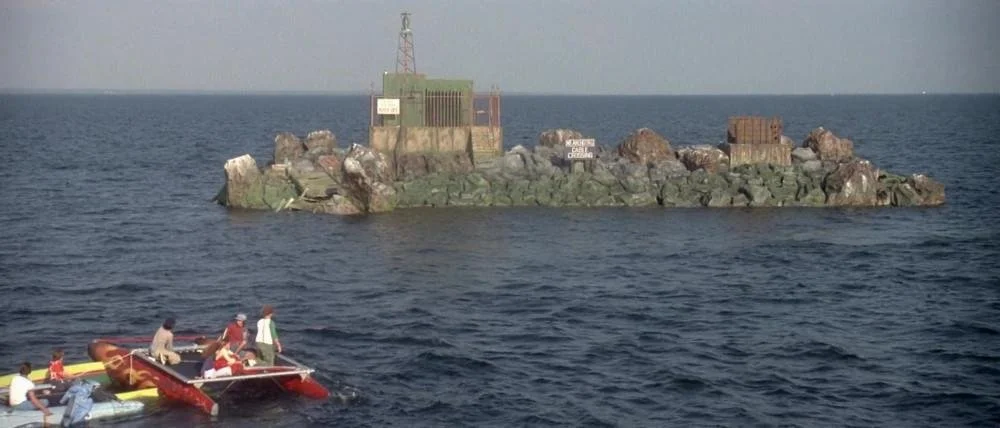
What exactly was Cable Junction?
Within the fictional geography of Amity Island, Cable Junction is a small, isolated rocky outcrop housing an electrical relay station. Its purpose is to carry essential power cables serving Amity and the surrounding islands.
The structure appears to be little more than a collection of rocks, electrical equipment and a small landing area, but its position far out at sea makes it an important navigational landmark.
Early in the film, the teenagers discuss Cable Junction while sailing beyond the familiar waters of Amity. When Sean Brody asks what lies beyond it, Doug replies that there's the Atlantic Ocean — and then Ireland.
It's a throwaway exchange that helps establish just how far the young sailors are venturing from safety.
Later, when their boats are damaged and the shark continues its relentless pursuit, Cable Junction becomes their only realistic hope of survival.
Building an island from scratch
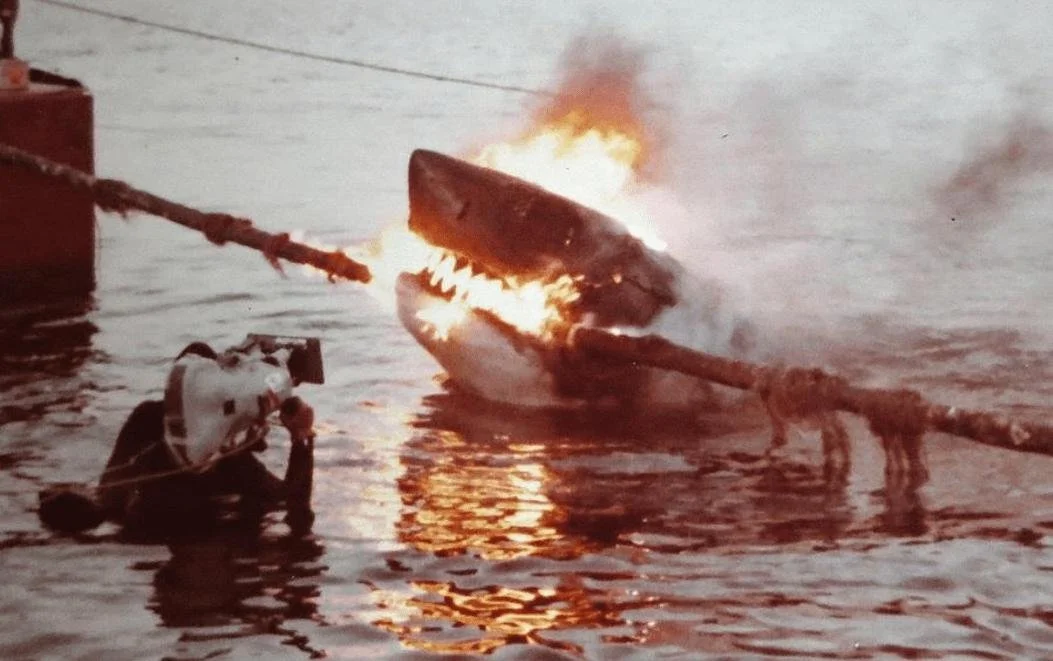
Although Cable Junction looks like a permanent feature of the Amity coastline, it never existed as a real island.
The entire structure was created specifically for JAWS 2, using artificial rocks made from fibreglass and mounted on floating barges.
Filming took place in the Gulf of Mexico off Navarre Beach, Florida, where much of the sequel's demanding marine photography was undertaken during 1977.
Unlike the original JAWS, which was predominantly filmed around Martha's Vineyard, the sequel relied heavily on Florida's warmer waters and more favourable filming conditions.
The Cable Junction set was particularly ambitious because it needed to accommodate not only the actors and their boats but also the enormous mechanical shark and its underwater operating equipment.
According to a retrospective published by the Gulf Breeze News in 2018, the artificial island was specifically constructed to allow the shark's substantial underwater mechanism to pass beneath it.
This was essential for the finale, in which the shark had to approach the structure, attack the electrical cable and appear to be electrocuted.
The island that nearly sailed to Cuba
Perhaps the most extraordinary story surrounding Cable Junction concerns an incident in which the entire island reportedly broke free from its moorings.
The set's floating construction made it vulnerable to changing sea conditions, and at one point it began drifting away from its intended location.
Director Jeannot Szwarc later recalled in the 2001 documentary The Making of Jaws 2 that he was informed his island was heading towards Cuba.
It was an amusing description of a potentially serious production problem. An elaborate, expensive set had effectively become a runaway vessel.
The production team eventually recovered the structure and returned it to position.
The island's problems didn't end there. Its artificial rocky surface was reportedly extremely slippery, making it difficult for the actors to climb onto it or maintain their footing. This resulted in repeated takes and accidental falls into the water.
For a location that was supposed to represent safety, Cable Junction could be surprisingly treacherous for the performers themselves.
Where was Cable Junction when filming stopped?
Cable Junction was a mobile film set rather than a fixed location, allowing the production to move it as required.
Accounts of the filming indicate that it was kept at the Shalimar Yacht Basin when not in use, where its distinctive artificial lighthouse or beacon could reportedly be seen from the nearby Garniers Bayou Bridge.
The climactic Cable Junction sequences were filmed off Navarre Beach, with the Florida coastline standing in for the waters surrounding fictional Amity Island.
Today, there is no permanent Cable Junction landmark to visit. Its legacy survives through the film, production photographs and the memories of those who witnessed the enormous undertaking of filming JAWS 2 along Florida's Emerald Coast.
The electrifying finale
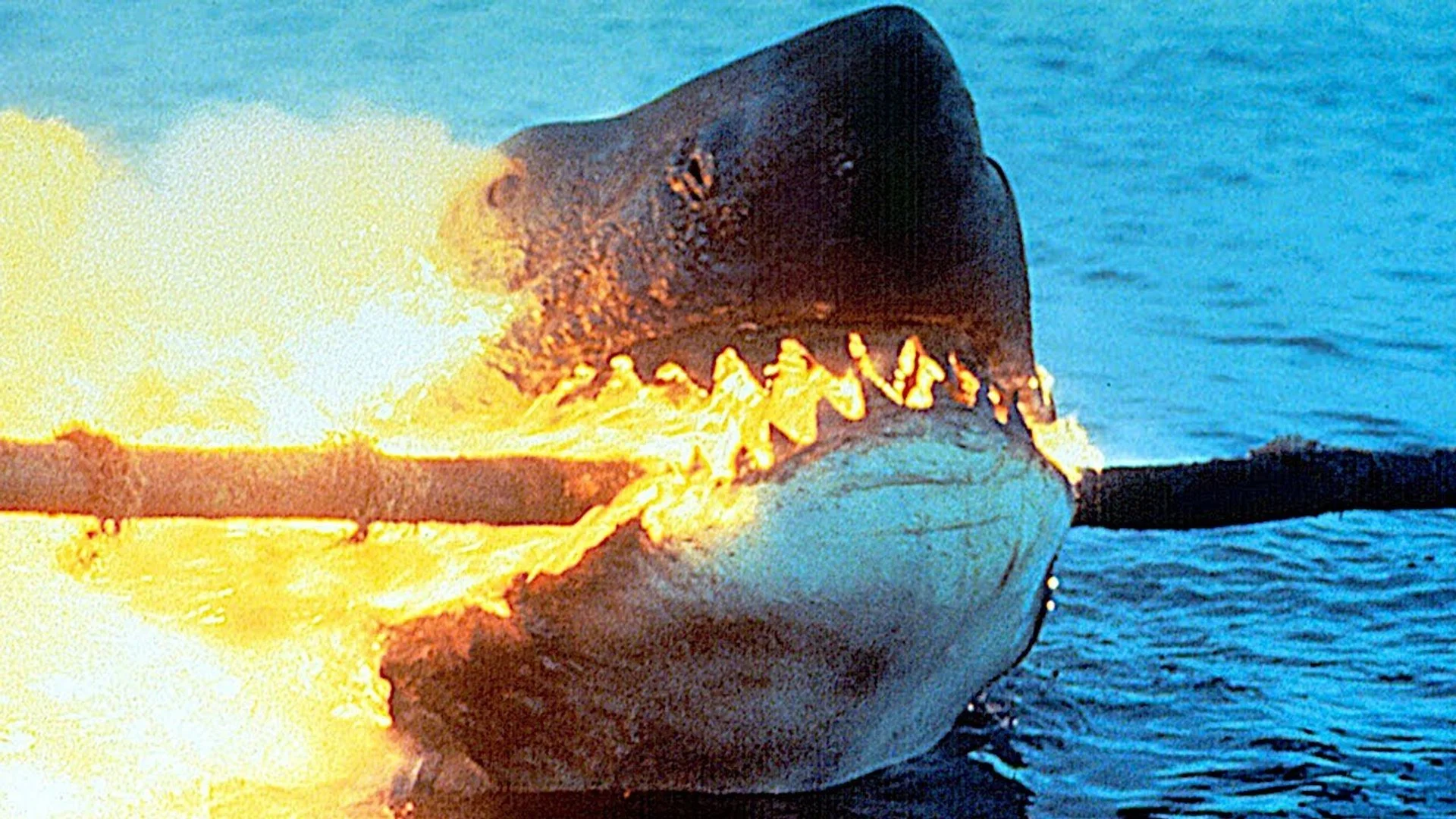
Cable Junction ultimately provides the setting for one of the most spectacular shark deaths in cinema history.
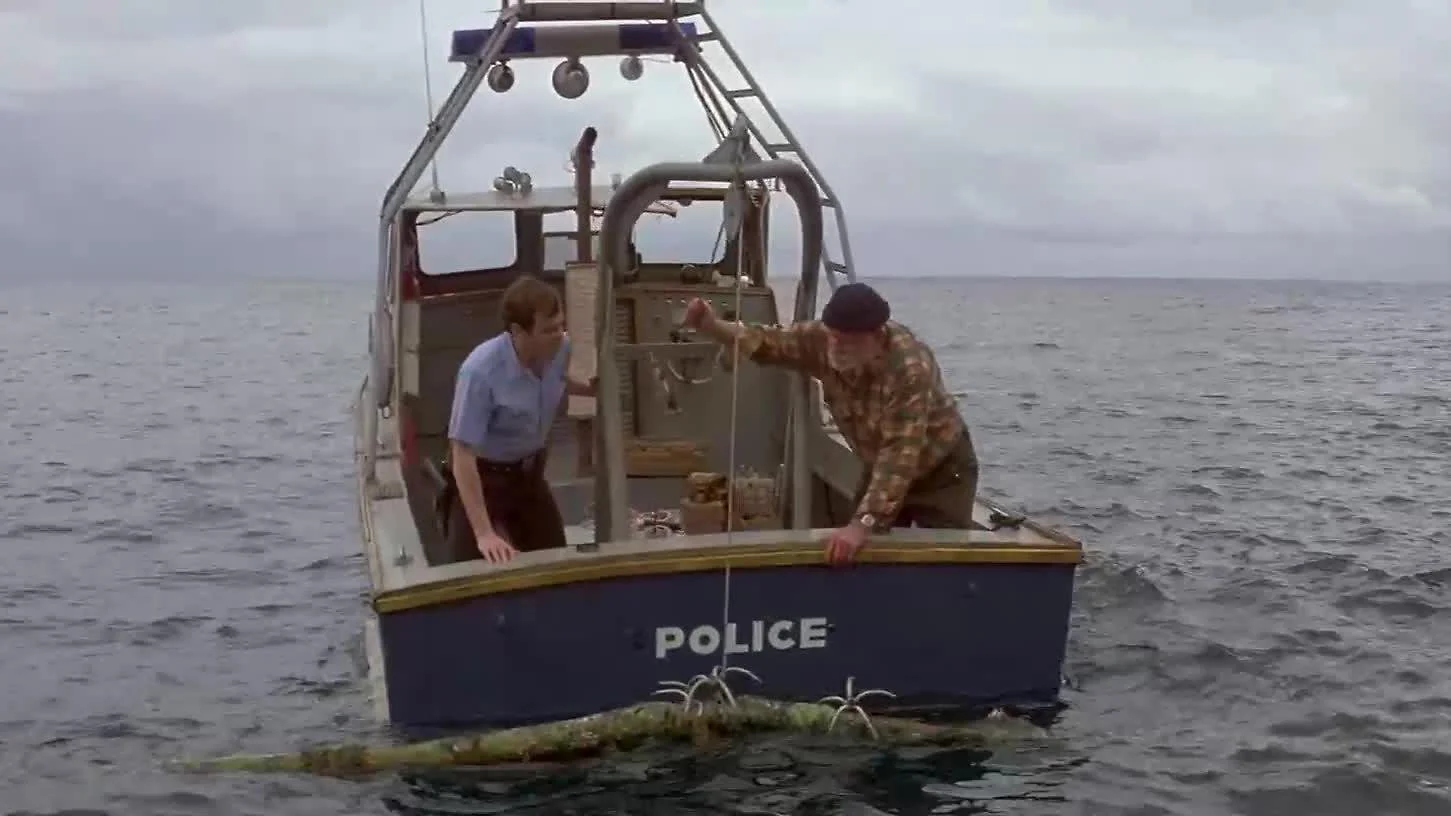
With the teenagers stranded and his youngest son Sean still in danger, Chief Brody arrives aboard a police boat, only to find himself facing the same nightmare he believed he had ended three years earlier.
As the shark circles the damaged sailboats, Brody attempts to pull the teenagers to safety using a winch. Instead, he inadvertently hooks an underwater electrical cable.
Realising that the cable could be turned into a weapon, Brody devises a desperate plan.
He uses an inflatable raft and strikes the cable with an oar, creating vibrations designed to attract the shark.
As the great white approaches, Brody taunts it, daring the creature to attack.
The shark finally lunges towards him, sinking its jaws into the high-voltage cable.
An enormous electrical discharge erupts through its body, sending flames and smoke into the air as the shark is fatally electrocuted.
It is a spectacular conclusion that replaces the original film's exploding scuba tank with an equally dramatic demonstration of Brody's ability to improvise under extraordinary pressure.
And, once again, the police chief survives by exploiting his environment rather than relying on conventional weapons.
Why Cable Junction remains an iconic JAWS location
Although it only features prominently during the film's final act, Cable Junction has become one of the most recognisable locations in the JAWS sequels.
Part of its appeal lies in its unusual design. The isolated rocky island, exposed electrical cables and surrounding open water create a distinctive setting that feels both industrial and strangely vulnerable.
It also serves an important storytelling purpose.
For much of JAWS 2, the teenagers are completely exposed to the shark, with little protection beyond their fragile sailing boats. Cable Junction appears to offer the possibility of solid ground and safety, yet reaching it proves almost as dangerous as remaining at sea.
The island also gives Brody something he lacked during much of the original film: a fixed position from which to confront his enemy.
Where the Orca's sinking deck had forced him into an increasingly desperate battle for survival, Cable Junction provides an unexpected advantage.
The shark remains the more powerful creature, but Brody once again proves himself the more resourceful opponent.
A lasting piece of JAWS history
Nearly half a century after JAWS 2 was released on 16 June 1978, Cable Junction remains a fascinating example of practical filmmaking on an ambitious scale.
Before computer-generated environments became commonplace, filmmakers had to physically construct the locations their stories required — even when those locations were supposed to sit in the middle of the ocean.
The result was an artificial island that floated, moved, caused production headaches and, according to its director, once attempted an unscheduled voyage towards Cuba.
Yet on screen, Cable Junction became something far more important: the place where Martin Brody finally brought Amity's second great white nightmare to an end.
For JAWS fans, it remains a location every bit as memorable as the Orca, the Amity beaches and the familiar waters off Martha's Vineyard.
And while the real Cable Junction may have disappeared when filming ended, its place in JAWS history is permanently secured.
Editorial note: The drifting-island incident is supported by accounts attributed to Szwarc's making-of documentary. The reported Shalimar Yacht Basin storage location comes from a secondary production account and would benefit from independent confirmation before publication.
If you would like to write for The Daily Jaws, please visit our ‘work with us’ page
For all the latest Jaws, shark and shark movie news, follow The Daily Jaws on Instagram, Twitter and Facebook.