
Five reasons the JAWS THEME still scares you
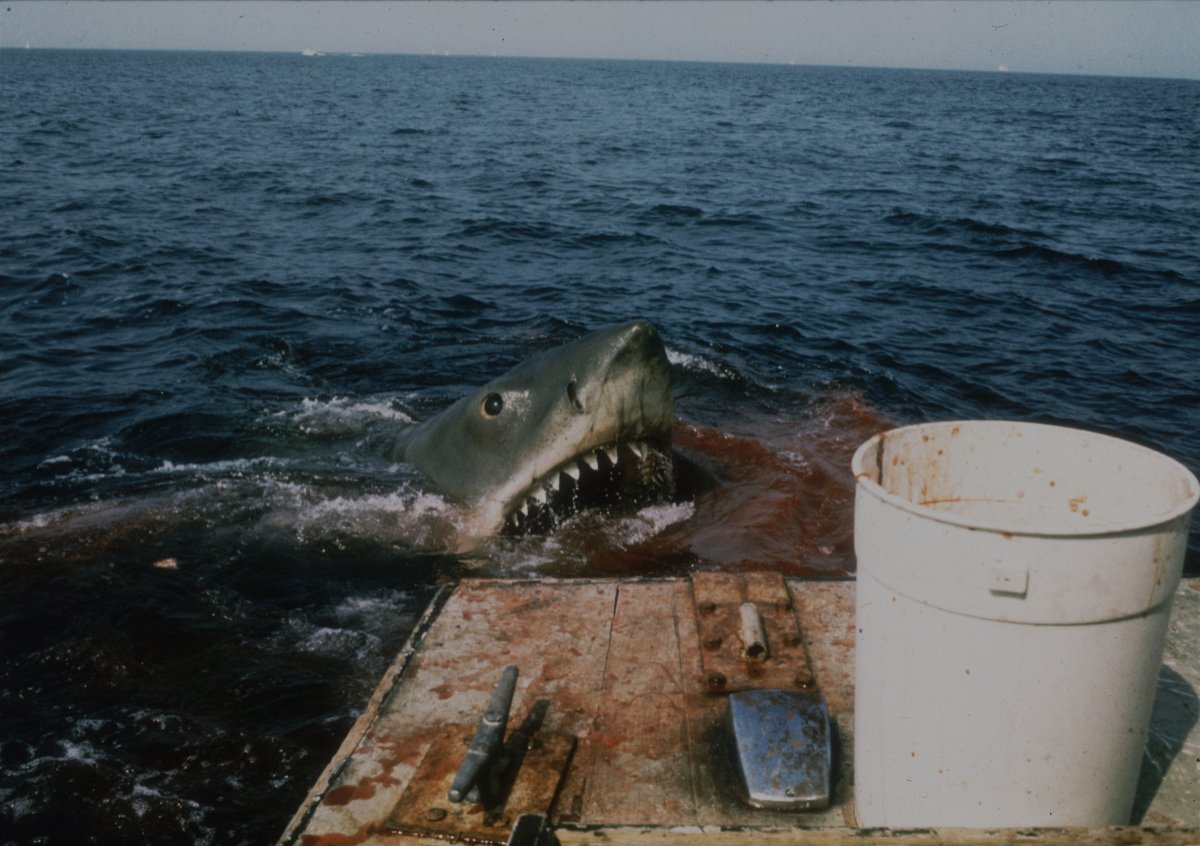
When Steven Spielberg set out to make Jaws, he didn’t expect a production nightmare. But that’s exactly what he got.
The film nearly never made it to theaters. The budget ballooned. The shooting schedule spiraled out of control. And the mechanical shark—meant to be the star—did the worst possible thing it could do in the water:
It sank.
With the shark malfunctioning, Spielberg was forced into a creative corner. He couldn’t show the monster as planned. Instead, he had to suggest it.
That’s where John Williams came in—and ultimately saved the film.
1. The Bold Return of the Orchestra
In 1975, orchestral film scores weren’t exactly in vogue. But Spielberg insisted on using a full orchestra anyway—a decision that would prove crucial.
It wasn’t just about sound. It was about presence.
The orchestra gave the film a scale and emotional depth that synthetic or minimalist scoring couldn’t match. More importantly, it provided a way to replace what audiences couldn’t see—the shark—with something they could feel.
2. The Power of Simplicity
The now-iconic theme from Jaws is almost laughably simple: just two alternating notes.
When Spielberg first heard it, he thought Williams was joking.
But that simplicity was the genius.
Williams didn’t want a complex, intellectual motif. He wanted something primal—something that hits you in the gut. The shark isn’t a calculating villain; it’s an instinct-driven predator. So the music reflects that: mechanical, relentless, unstoppable.
3. Music as a GPS for Terror
One of the score’s most brilliant tricks is what film scholars call the spatial perceptive function.
In Jaws, the music tells you where the shark is, even when you can’t see it.
Faster tempo? The shark is moving quickly.
Louder, denser orchestration? It’s closer to the surface.
Sparse, low tones? It’s deeper below.
The audience is subconsciously guided through the film’s space purely through sound. The theme becomes a warning system—an invisible fin cutting through the water.
Even more cleverly, when the theme doesn’t play, it signals safety… or a fake-out. This builds trust with the audience—only to break it later for maximum shock.
4. Controlling Time Itself
The score also manipulates your sense of time through what’s known as the temporal perceptive function.
The famous theme often begins slowly—around 54 beats per minute—creating a sense of dread. Then, suddenly, it accelerates.
Even if you don’t see the shark, you feel it closing in.
This shift in tempo becomes a psychological trigger. Your brain interprets the increasing speed as danger escalating. The music essentially tells you how urgently you should panic.
5. Fear Needs Contrast
What makes Jaws so effective isn’t just the fear—it’s the contrast.
Williams didn’t score the entire film as horror. Instead, he leaned into its adventure elements, writing lighter, almost sea shanty–like themes for calmer moments.
These breaks in tension are essential.
They reset your emotional baseline so that when the fear returns, it hits harder. This is the emotive function of the score—guiding how you feel before, during, and after each moment of danger.
The Shark You Never See
Because the mechanical shark failed, Spielberg showed it far less than planned. Ironically, this limitation became the film’s greatest strength.
The real monster in Jaws isn’t what you see—it’s what you anticipate.
And that anticipation is driven almost entirely by music.
Spielberg himself later credited the score with half the film’s success. What initially sounded like a joke became one of the most iconic soundtracks in cinema history.
Final Bite
Jaws didn’t just change summer blockbusters—it changed how filmmakers use music.
By turning a simple two-note motif into a storytelling engine, John Williams proved that sometimes the scariest thing in the ocean… is what you hear coming.
And sometimes, the thing that saves a film isn’t what works.
It’s what doesn’t.