
Why No Shark Movie Has Truly Replaced JAWS
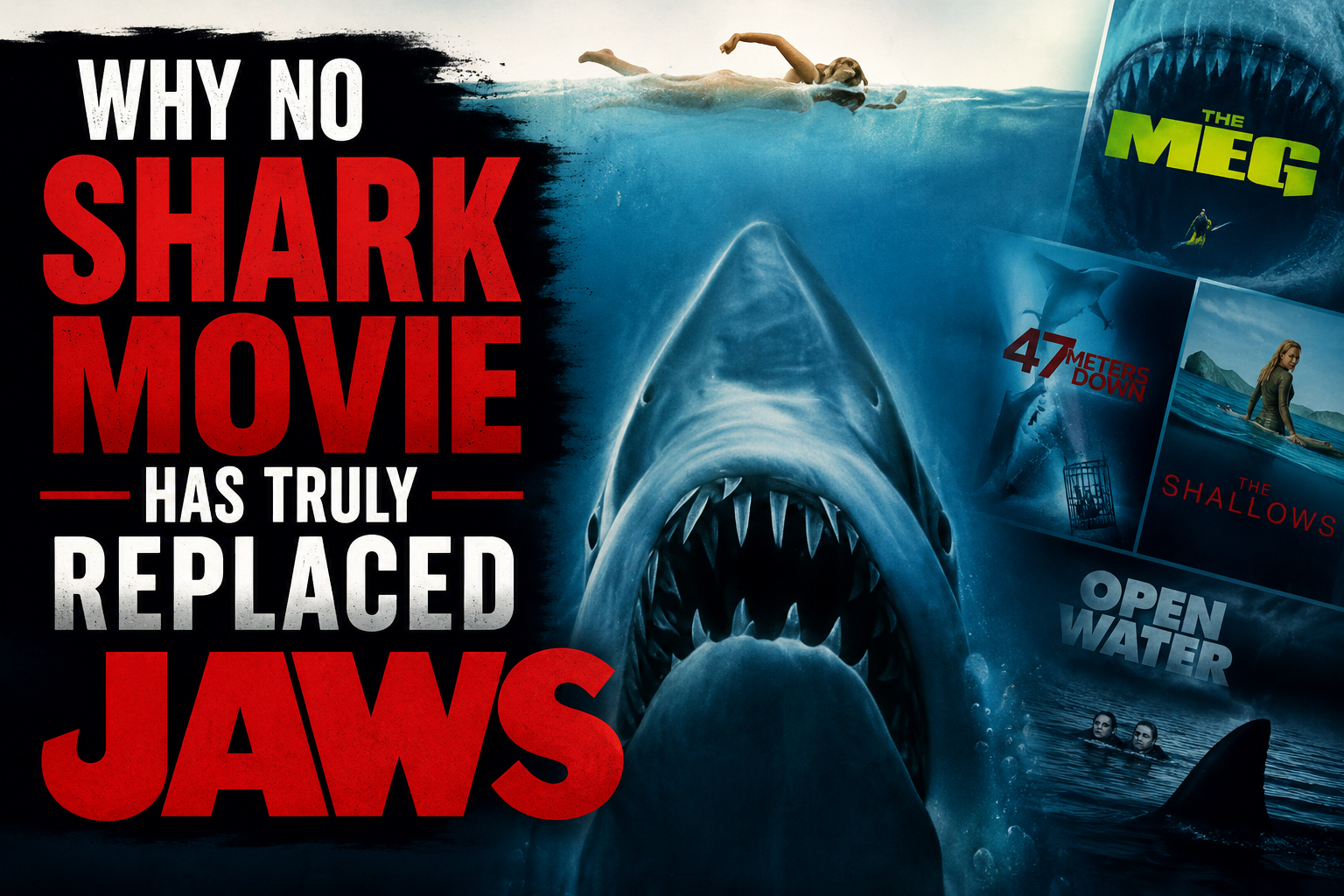
JAWS did more than redefine shark movies. The film reshaped the entire entertainment industry. Video games copied its underwater tension through survival horror titles and open-water exploration games built around fear and limited visibility. Its suspense style shaped television thrillers, disaster films, and even music, with John Williams’ score becoming one of the most recognizable soundtracks ever created.
Streaming platforms constantly rotate shark documentaries, survival thrillers, and ocean horror content because audiences still respond to the fear first popularized by JAWS. The movie’s legacy even appears in online gaming markets, where real money online casino in Canada operators offer various games with bonus features, free spins, or progressive jackpots.
Nearly every shark movie released afterward attempted to copy Spielberg’s formula, yet none matched its cultural reach or long-term influence. Decades later, JAWS still remains the defining blueprint for suspense-driven entertainment across the entire industry.
Production Problems Accidentally Improved The Movie
The mechanical shark used during filming malfunctioned constantly. Salt water damaged internal systems, the shark frequently sank, and filming delays became severe. Spielberg suddenly faced a practical problem: the shark could not appear on screen as often as planned.
Instead of showing the shark directly, Spielberg developed alternative ways to represent danger. Yellow barrels moving across the water suggested the shark’s presence without revealing it. John Williams’ score became a warning signal. Underwater POV shots forced audiences to anticipate attacks before they happened.
Those limitations created suspense many later shark films failed to reproduce. Modern CGI allows filmmakers to show unlimited shark action, but constant visibility removes imagination from the experience. The audience no longer fears what might appear because everything is already visible.
Most Shark Movies Prioritize Action Over Suspense
Contemporary shark films frequently confuse intensity with fear. Loud attacks, rapid pacing, giant sharks, and graphic violence dominate the genre. The structure resembles action cinema more than psychological horror.
JAWS operated differently. The film slows down repeatedly. Conversations last several minutes. Long stretches contain no shark attacks at all. Spielberg builds tension through waiting and uncertainty rather than nonstop movement.
The July 4th beach sequence demonstrates this perfectly. The shark remains unseen for much of the scene, yet anxiety constantly increases. Every swimmer appears suspicious. Every splash becomes threatening. The audience scans the water searching for danger before anything actually happens.
That level of controlled suspense rarely exists in modern shark movies because many directors fear slowing the pace. Streaming-era horror often prioritizes immediate stimulation over sustained tension.
The Characters Mattered More Than The Shark
Most shark films treat human characters as disposable victims. Their purpose is usually limited to attack sequences. JAWS succeeded because the human drama remained compelling even without shark scenes.
Brody, Quint, and Hooper all represent conflicting personalities and fears. Brody fears the ocean itself. Hooper approaches the shark scientifically. Quint treats the hunt as psychological warfare shaped by past trauma.
Quint’s USS Indianapolis monologue remains one of the most important scenes in horror history because it transforms shark fear into something deeply personal. The speech introduces exhaustion, helplessness, survivor trauma, and the terror of open water isolation. The scene contains no shark visuals, yet it intensifies fear more effectively than many modern attack sequences.
Without believable characters, shark movies become repetitive survival exercises. JAWS avoided that problem by grounding the story in personality conflict and emotional vulnerability.
The Ocean Itself Became Terrifying
Many shark films focus entirely on the predator. JAWS understood the environment itself was frightening.
The movie repeatedly emphasizes:
open water isolation
limited visibility
helplessness
distance from safety
unseen movement below the surface
The shark functions as an extension of that larger fear.
Humans naturally struggle with environments they cannot fully observe or control. Deep water activates uncertainty because vision disappears beneath the surface. Spielberg amplified that discomfort by forcing viewers to stare into empty ocean space while expecting danger to emerge at any moment.
CGI Weakened Physical Realism
Many modern sharks move unnaturally. Water interaction lacks realism. Physical impact often resembles animation rather than living movement. Audiences subconsciously recognize the difference even when visual effects appear detailed.
JAWS still feels dangerous partly because the actors interacted with real water conditions. Boats tilted unpredictably. Ocean weather disrupted filming. Physical environments created genuine instability on screen.
Several modern filmmakers have openly acknowledged this issue. New shark productions increasingly return to practical effects because purely digital sharks often fail to generate believable tension. Perfect visual effects do not automatically create fear. Sometimes visible imperfection produces stronger realism than flawless CGI imagery.
Shark Movies Became Self-Aware
The genre gradually shifted toward absurdity after years of sharksploitation films. Giant sharks, tornado sharks, mutated sharks, and exaggerated creature features transformed the genre into parody.
Movies like Sharknado embraced intentional ridiculousness. Others attempted large-scale spectacle similar to disaster films. While commercially successful, many stopped treating sharks as psychologically frightening creatures.
Spielberg never approached the concept ironically. The shark represented uncontrollable natural danger rather than entertainment spectacle. That seriousness allowed the fear to feel authentic. Once audiences begin laughing at sharks, replacing JAWS becomes almost impossible.