
How Modern Media Keeps Reinventing The Shark
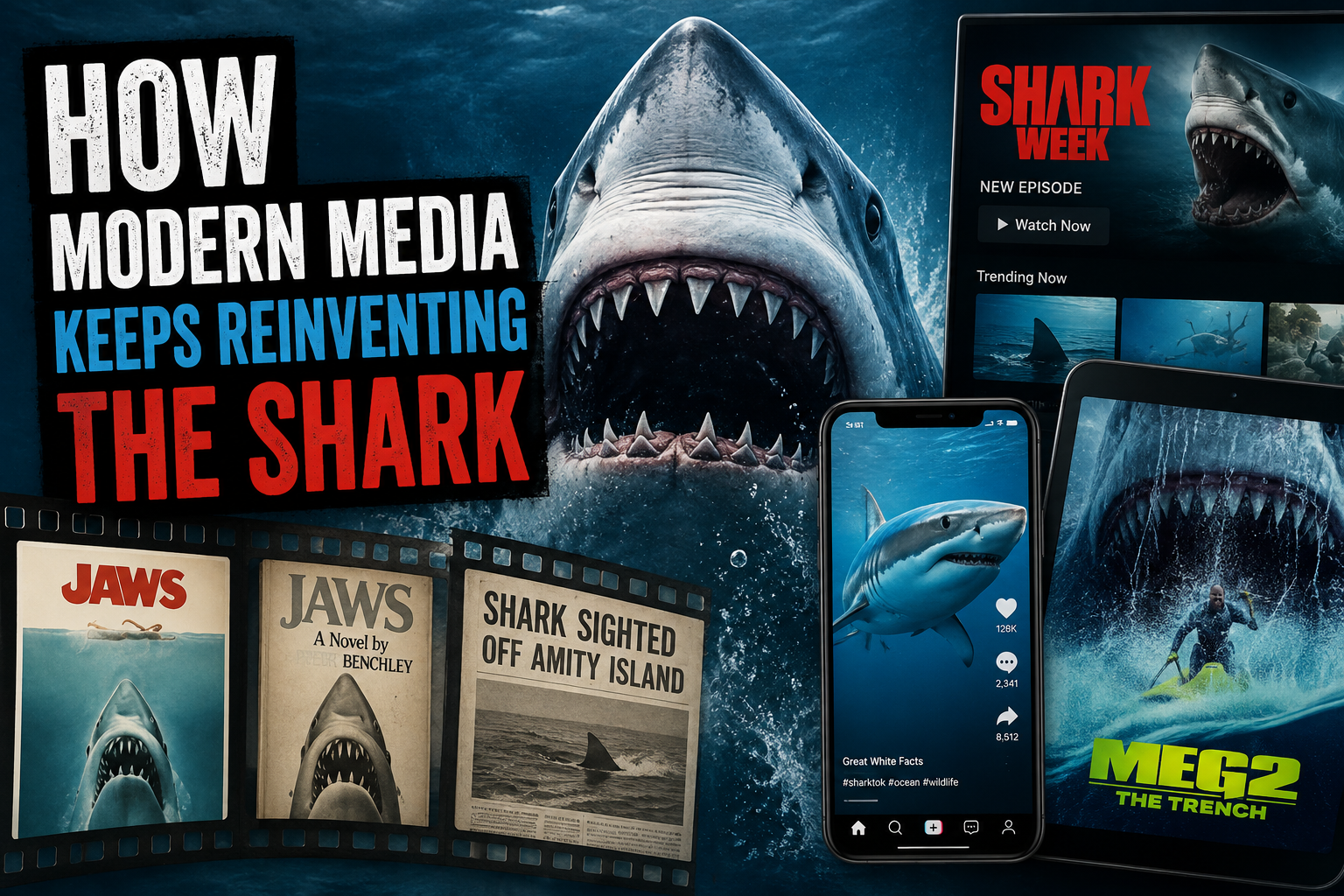
There are few creatures that have managed to capture the public’s imagination quite like the shark. For well over half a century, film, television and gaming have helped to shape how audiences see this apex predator, swinging between outright terror and genuine fascination. That fascination hasn’t stayed static, either. Each generation of storytellers has found new ways to frame the same animal, whether as an unstoppable monster, a scientific marvel or even the star of a video game. The result is a strange kind of cultural evolution, in which the shark’s image gets reshaped every time a new format picks it up.
The Jaws Effect
Steven Spielberg’s 1975 classic Jaws is still the reference point for most people’s mental image of a shark: a silent and relentless hunter lurking beneath the surface. That single movie managed to empty beaches, spike interest in shark fishing, and cement a template that cinema has leaned on ever since, from B-movie monster flicks to documentaries.
Shark Week’s Evolution
Television took the baton up with Shark Week, which began in 1988 as a ratings stunt and grew into the longest-running event in cable TV history. Early instalments often doubled down on danger and spectacle, sometimes blurring fact with fiction to keep viewers hooked.
In recent years, the format has leaned harder into genuine marine science, featuring real researchers, tagging expeditions, and conservation messaging alongside the breaching great whites audiences tune in for. That shift mirrors a wider cultural move away from shark-as-monster storytelling and towards a more accurate picture of an animal that is, for the most part, no threat to humans at all.
Sharks In Gaming
Gaming has picked up on this same fascination, translating the shark’s mix of danger and allure into interactive entertainment. Push Gaming’s Razor Shark is a standout example: a high-volatility slot built around the predator’s mystique, pairing cartoon-style ocean visuals with mechanics designed to reward players hunting big multipliers.
This online slots game uses the stacked shark symbols and a free spins round with rising multipliers to recreate some of the adrenaline-and-reward tension that shark media has always traded on. It’s a neat illustration of how a cultural icon born in cinema can be repackaged for an entirely different medium.
Same Formula, Different Medium
What’s interesting is how consistent the underlying formula remains across all formats. Whether it’s a movie, a documentary, or a game, sharks are almost always framed through the same lens of mystery, power and unpredictability.
Games lean on this by utilising visuals that portray sharks the same way movies do, as the ultimate unseen threat. The visual language rarely strays from sharp teeth, dark water and sudden movement, regardless of whether the goal is to scare or entertain.
Fact Versus Fiction
At the same time, real shark science tells a very different story. Sharks are ecologically vital, slow to reproduce and increasingly at risk from overfishing and habitat loss. Marine biologists have spent years trying to shift public perception away from the Jaws-era stereotype, arguing that fear-driven narratives actually make conservation harder.
The tension between accurate representation and entertainment value hasn’t disappeared, but it has become more visible, with audiences increasingly expecting substance alongside spectacle.
Conclusion
Modern media hasn’t abandoned the shark’s dramatic potential, but it has diversified how that drama gets used. Documentaries increasingly foreground the animal’s biology and behaviour, movies still prime fear, and games translate the same imagery into pure entertainment.